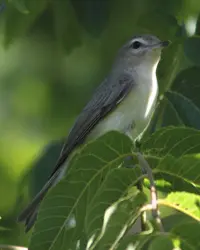
Sehome Hill Arboretum Birder's Field Guide
Free from the noise of city life, the Arboretum is one of the best places in town to spot unique bird species and hear their songs and calls. As a natural area, many species call the Arboretum home, and experiencing the presence of the birds in the morning and evening light is magical. We have identified as many as 16 species that reside in the arboretum, and below you can listen to their songs and calls, whether you are at home or on the trails of the Sehome Hill Arboretum.
More Information
Click on any bird to find more facts and audio from the National Audubon Societies bird guide.
Barred Owl
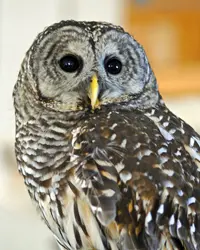
Barred Owl Description
The Barred Owl has traveled a long way from its native eastern North America to occupy the Arboretum. Considered invasive to the Pacific Northwest, the U.S. Fish & Wildlife Service is attempting to manage their population. Although primarily nocturnal, keep an ear out for its unmistakable eight-note baritone hoot.Cassin's Vireo
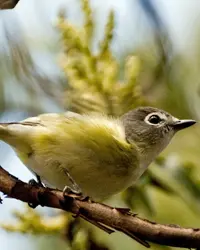
Cassin's Vireo Description
Named after prominent nineteenth-century ornithologist John Cassin, Cassin’s vireo is a migratory songbird native to the Pacific States and British Columbia. In the summer, it can be found in its tiny nest or searching for insects, with a raspy, chattering call. As winter nears, wish Cassin’s vireo a safe journey to Mexico and southern Arizona.Common Nighthawk
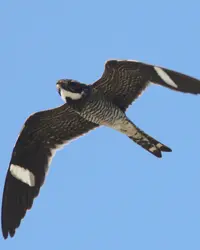
Common Nighthawk Description
Despite its name, the Common Nighthawk can be found day and night hunting for flying insects. However, they are most active during dawn and dusk. As a striking aerial hunter with a shrill, nasal call, the Common Nighthawk bird is unignorable.Downy Woodpecker
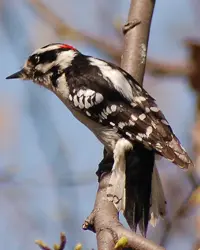
Downy Woodpecker Description
The Downy Woodpecker, found throughout the U.S. and Canada, is the smallest woodpecker in North America. It sports a stubby beak, white belly, spotted black plumage, and, on males, a red spot on the nape. Listen closely for its falling and flat chirps, drums, rattles, and trills.Hairy Woodpecker
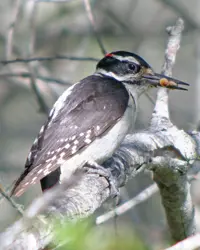
Hairy Woodpecker Description
The Hairy Woodpecker is very similar to the Downy Woodpecker. The two share similar habitats and appearances, and the same call patterns and types. However, the Hairy is larger and louder and, unlike the Downy, lives in Mexico and the American Southwest deserts during the Winter. Find the Hairy in large trees around springtime.Hammond's Flycatcher
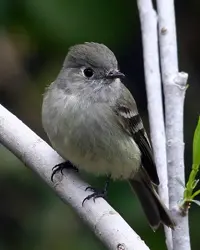
Hammond's Flycatcher Description
Hammond’s Flycatcher is a chubby, short-tailed bird, with sage-gray body and plumage. In the warmer seasons, it is found throughout the Pacific Northwest, British Columbia, and Yukon, and some parts of Alaska in the cooler seasons. The Hammond’s migrates to the American Southwest and, especially in the winter, Mexico.Hutton's Vireo
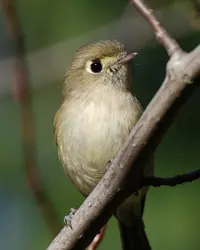
Hutton's Vireo Description
Hutton’s Vireo is a mostly non-migratory, woodland songbird residing along the Pacific Coast, Southwest, and Mexican coastal regions. It is gray or grayish yellow green, “compact and chunky.” Hutton’s calls are monotonous, comprised of one to three parts. See this active little bird hop about the branches year-round in the Arboretum.Northern Flicker
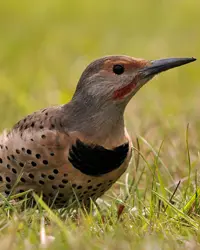
Northern Flicker Description
The Northern Flicker is a standout woodpecker. It is light brown with black spots and flashes of bright red, yellow, or orange. Interbreeding in Canada and Alaska. The bird resides in the continental U.S. and near Mexican coastlines. Listen for the Flicker’s distinct “kikikiki,” “peough” and drums in spring.Northern Saw-whet Owl
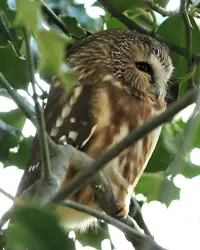
Northern Saw-whet Owl Description
The Northern Saw-whet Owl pines for coniferous thickets like other owls. Despite its varied migration patterns and habitats across the continent, it fortunately can be seen year-round in the Arboretum. Usually, some variation of browns and black, the Northern Saw-whet is mostly silent, save for its toots and whistles heard in late winter and spring.Olive-sided Flycatcher
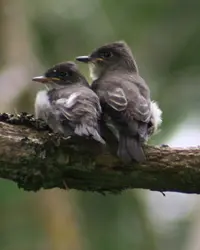
Olive-sided Flycatcher Description
Despite its name, the chirper and whistler Olive-sided Flycatcher is oft olivie-tinted neutrals. It breeds in Canadian and western American coniferous forests in the warmer seasons and winters as far as the South American tropics. Unfortunately, this Flycatcher’s existence is becoming threatened due to declining winter habitats.Pacific-slope Flycatcher
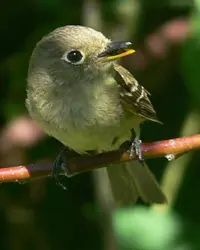
Pacific-slope Flycatcher Description
Another chirping and whistling flycatcher, the Pacific-slope Flycatcher was accurately named. This bird is found along and near the Pacific North American Coast, breeding on the coasts of British Columbia to California, and wintering in western and southern Mexico. Keep an eye out for this tiny olive- and chartreuse-tinted bird in the summer.Pileated Woodpecker
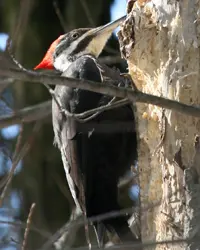
Pileated Woodpecker Description
The Pileated Woodpecker, the largest in North America, is easily spotted by its iconic bright red crest. This bird pecks distinct rectangular holes, oft in rotten wood for carpenter ants. The Pileated Woodpecker resides in the eastern U.S., lower Canadian provinces, and parts of the Pacific Northwest. Listen for its drumming and “cuk-cuk-cuk-cuk-cuk” chirps.Red-breasted Sapsucker
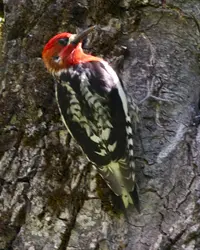
Red-breasted Sapsucker Description
The easy to spot Red-breasted Sapsucker can be found, like its cousins, drilling neat holes into trees searching for sap. This bird longs for the U.S. and Canada’s Pacific Coasts coniferous forests. Migration patterns vary by region; because the Arboretum is so close to the coast, which it loves the most, the Red-breasted Sapsucker may not migrate often.Rufous Hummingbird
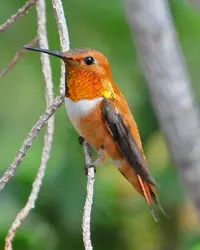
Rufous Hummingbird Description
The Rufous Hummingbird is small but mighty, faithfully defending its nourishing flower patches. Males glow copper: females shine green. Breeding in the Pacific Northwest and British Columbia in the spring, the Rufous Hummingbird summers in the western states and Mexico, and winters in the Gulf Coast states. Listen for its unique chirp-trill calls.Vaux's Swift
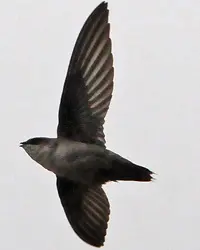
Vaux's Swift Description
The dark-colored Vaux’s Swift is usually flying and aerially hunting. It breeds along the Pacific Coast from British Columbia to Northern California. It winters in Mexico and tropical America. The in-state population of Vaux’s Swifts is gradually declining; deforestation of mature trees in the Northwest is forcing the bird northward.Warbling Vireo