Plant Guide
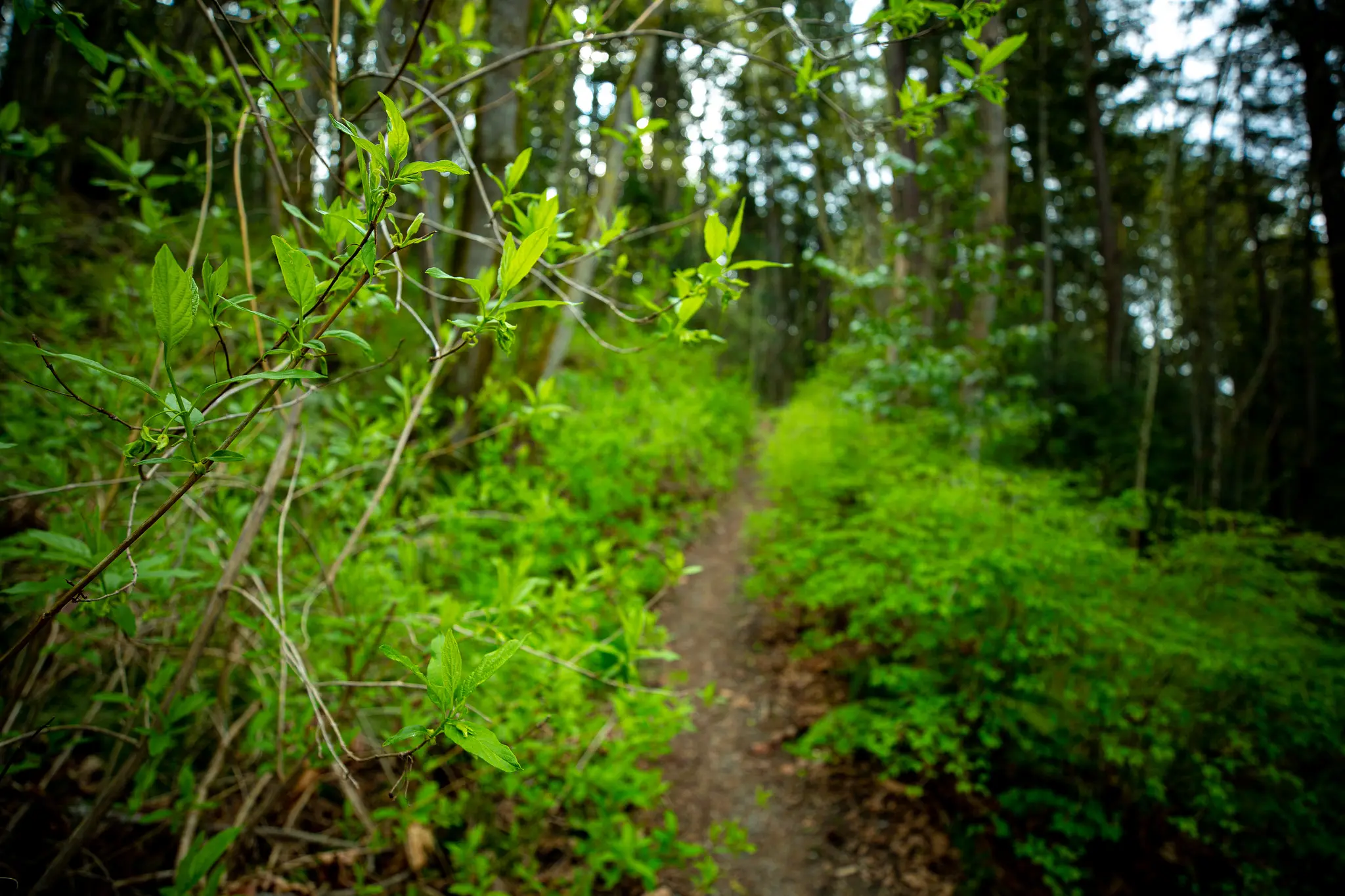
The Sehome Hill Arboretum is home to a multitude of tree species. The green natural mass shows all of its vast array of evergreen and deciduous foliage from miles away throughout the year. But there are more than just trees within the Sehome Arboretum. Numerous shrubs, herbs, ferns, and (unfortunately) invasive species take shelter in the shade. Below are some of the most frequent indigenous species that can typically be found during leisurely strolls. You can learn how to spot them and how to categorize them.
Coniferous Trees
Douglas Fir (Pseudotsuga menziesii)
Bark
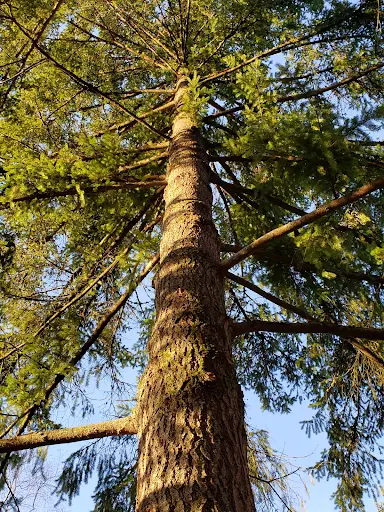
On younger specimens the bark is gray and smooth. Older specimens have a thick, corky bark that is often dark chocolate-brown in color. For older trees, the thick bark serves as a protective layer that can save the tree from being damaged in a forest fire.
Foliage
Douglas fir is distinguished by its thin, flat, one inch-long evergreen needles that are pointed but soft to the touch. . They produce light brown cones that have distinctive three-pronged bracts or "tails" extending from between the scales. Unlike true fir trees, the cones hang down from the branches rather than standing upright.
Size
Commonly grow up to 250 feet tall and 5-6 feet in diameter, and can live for over 500 years. Truly large old growth Douglas firs have been reported to reach over 300 feet in height and 10 ft in diameter, making them among the largest trees in the world. The Douglas fir is the most abundant tree in the Arboretum as well as the most economically valuable timber tree in North America.
Western Hemlock (Tsuga heterophylla)
Bark
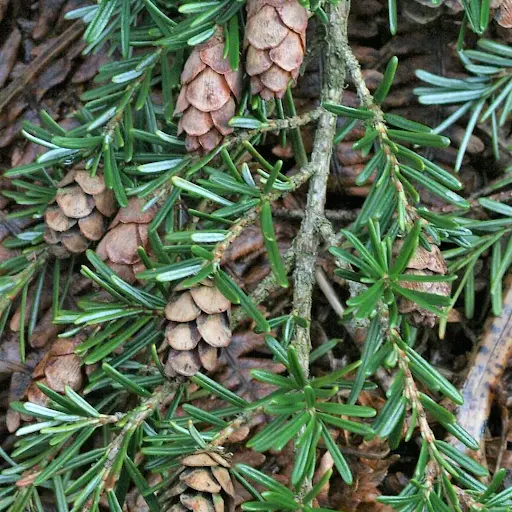
Dark brown to reddish-brown bark, with a rough texture and relatively shallow vertical furrows.
Foliage
Western hemlock is distinguished by its flat, blunt-tipped emerald-green needles. The needles come in two lengths with the shorter ones standing erect on the top of the twig, giving hemlock branches a noticeably furry appearance. The cones are small, less than an inch in length, and hang down from the ends of the branches.
Size
Western hemlock typically grows to about 98 to 164 feet in height and to about 4 feet in width. Western hemlock is a very shade-tolerant tree and prefers to germinate and grow in the understory of its taller neighbors. The best trick to identifying a western hemlock tree is to look at the growing tip (or leader) of the tree, which is usually drooping rather than erect like in most other conifers.
Western Red Cedar (Thuja plicata)
Bark
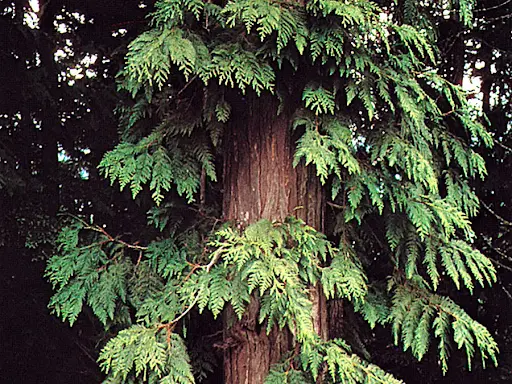
Brownish-red stringy bark with very shallow vertical furrows, appearing grayish-red in some cases.
Foliage
Sharp pointed scale-like leaves with a mossy green hue that overlap like shingles. They are organized in flat sequences. The branches droop down but turn up noticeably at the ends. Numerous small cones grow in a bent back position along the branch.
Size
The largest of all cedar species, Western red cedar grows up to 150 to 200 feet tall. Labeled the broadest tree in the Northwest, its buttressed base spans from 2 to 8 feet in diameter, with some old-growth specimens surpassing 15 to 20 feet diameter at ground level. In ideal locations individual Western red cedars can live over 1,000 years.
Deciduous Trees
Red Alder (Alnus rubra)
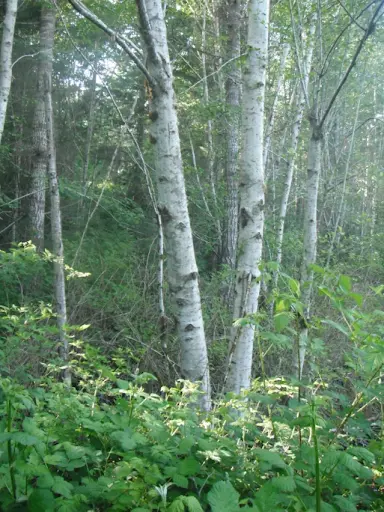
Bark
Red alder has thin, smooth, gray bark, often with patches of white lichen.
Foliage
Wavy, toothed, oval-shaped leaves with edges that are slightly rolled under. Large catkins appear in spring, producing small brown cone-like fruits less than an inch long.
Size
Red alder grows rapidly and reaches 40 to 80 feet in height with stems 10 to 34 inches in diameter. A single alder may produce multiple-stemmed trunks all from the same root system. This tree requires plenty of light so look for it in the breaks between stands of coniferous trees. The crown of an alder tree is relatively narrow, distinguishing it from Bigleaf maple.
Big Leaf Maple (Acer macrophyllum)
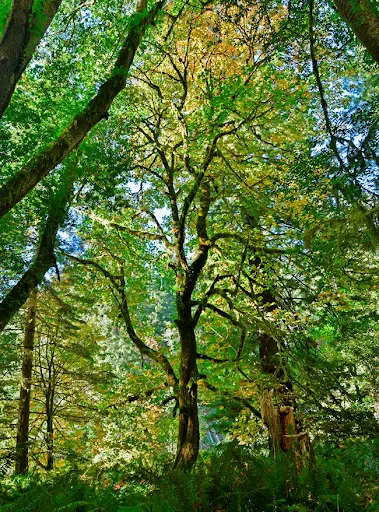
Bark
Smooth gray with vertical brown grooves.
Foliage
Large, palmately shaped leaves that consist of five lobes with very few teeth and can easily measure up to a foot across. Maples have their leaves arranged opposite each other in pairs on twigs, rather than the alternating leaf arrangement typical of most deciduous trees.
Size
Grows from 50 to 100 feet in height with a broad crown. Large individuals will frequently have multiple-stemmed trunks, with each stem up to 3 feet in diameter.
Shrubs
Tall Oregon Grape (Mahonia aquifolium)
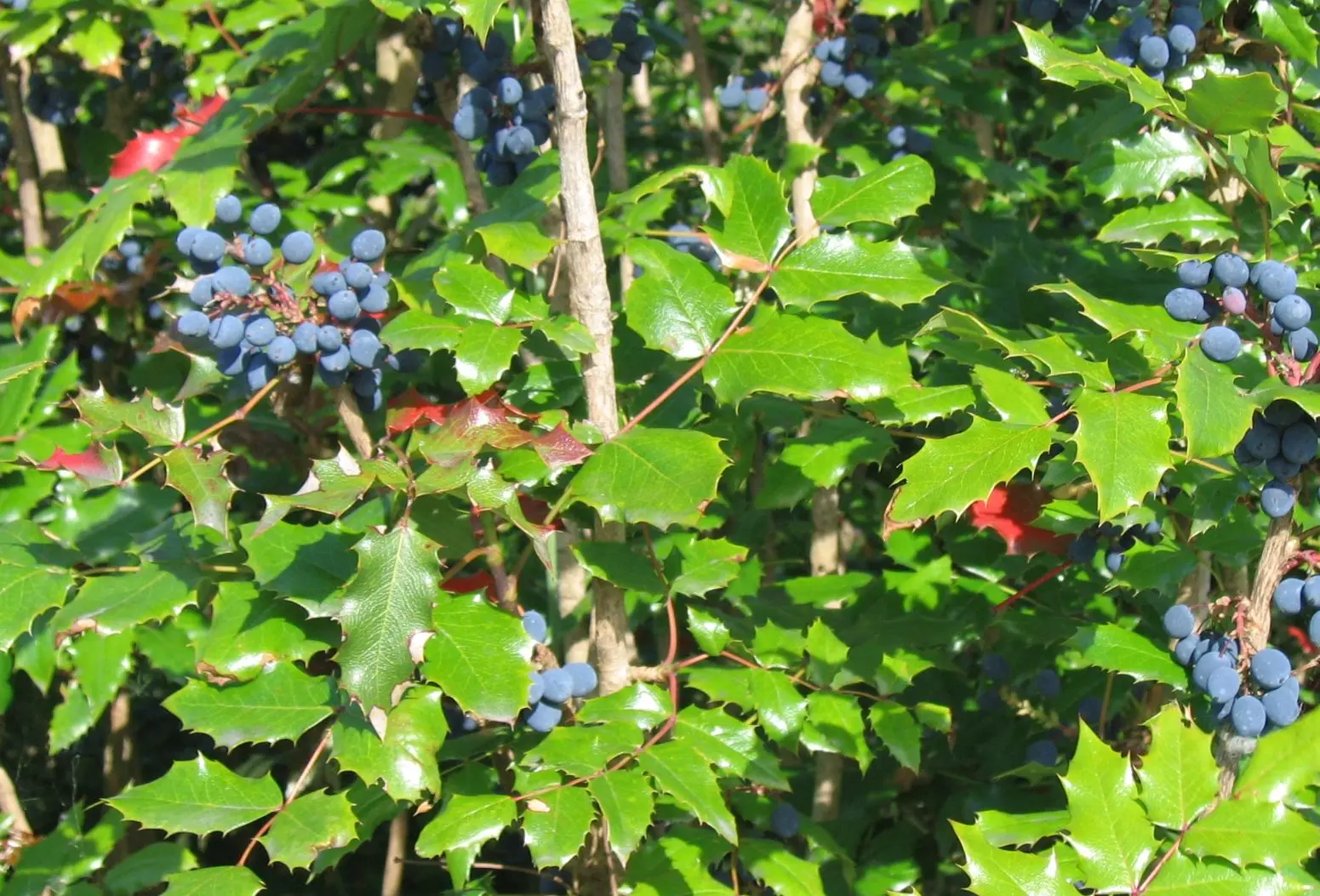
One of the most prominent traits of Tall Oregon Grape is the superficial similarity of its leaf to that of a Holly tree. The leaves of both plants have a shiny surface, a leathery texture, and a spiny edge. The difference is that Oregon grape actually has a compound leaf, and what appear to be individual leaves are leaflets--with five to nine of them making up each actual leaf. Tall Oregon Grape grows approximately five to six feet in height. Small clusters of yellow flowers appear before the edible blue berries.
Indian Plum/Osoberry (Oemleria cerasiformis)
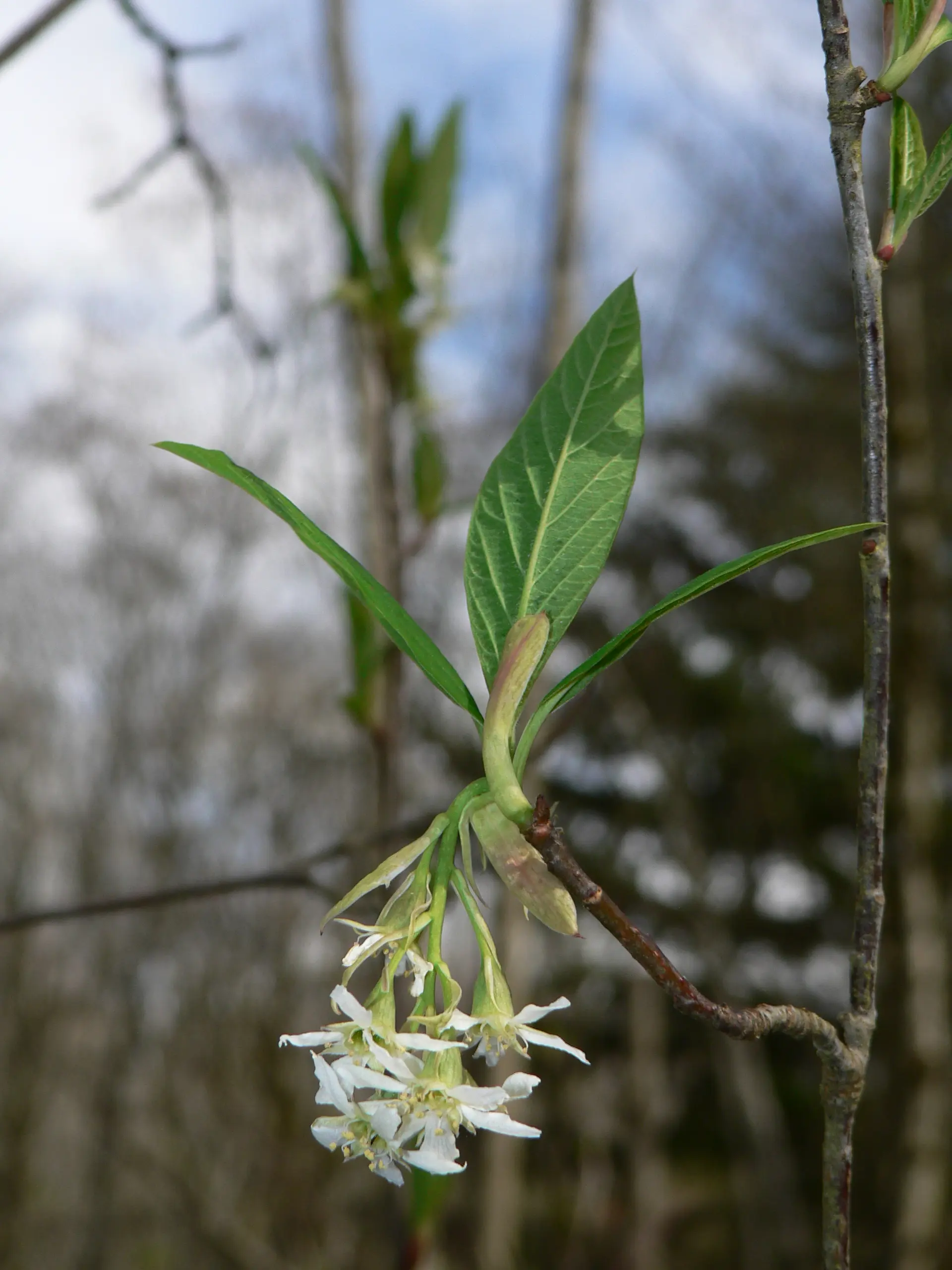
Indian Plum is a large native shrub that can grow up to thirteen feet tall. The leaves are shaped like a knife blade and are two to five inches long. If the leaves are damaged, they smell like cucumbers. The five-petaled waxy blossoms droop in white clusters. The flowers turn into a bitter but edible plum-like fruit.
Snowberry (Symphoricarpos albus)
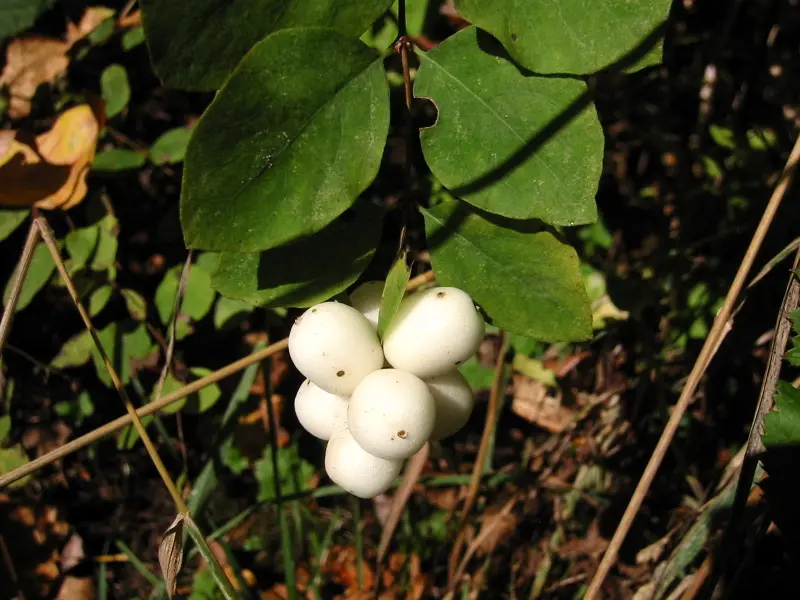
Snowberry is a medium sized shrub and is distinguishable by its oval-shaped leaves arranged as opposite pairs along a round stem. Its creamy or pinkish tubular flowers precede the inedible white berries in the fall.
There's More Shrubs!
These are only a few of the shrubs that flourish in the Arboretum. Others include Salmonberry (Rubus spectabilis), Salal (Gaultheria shallon), Oceanspray/Ironwood (Holodiscus bicolor), and Thimbleberry (Rubus parviflorus).
Ferns
Ferns
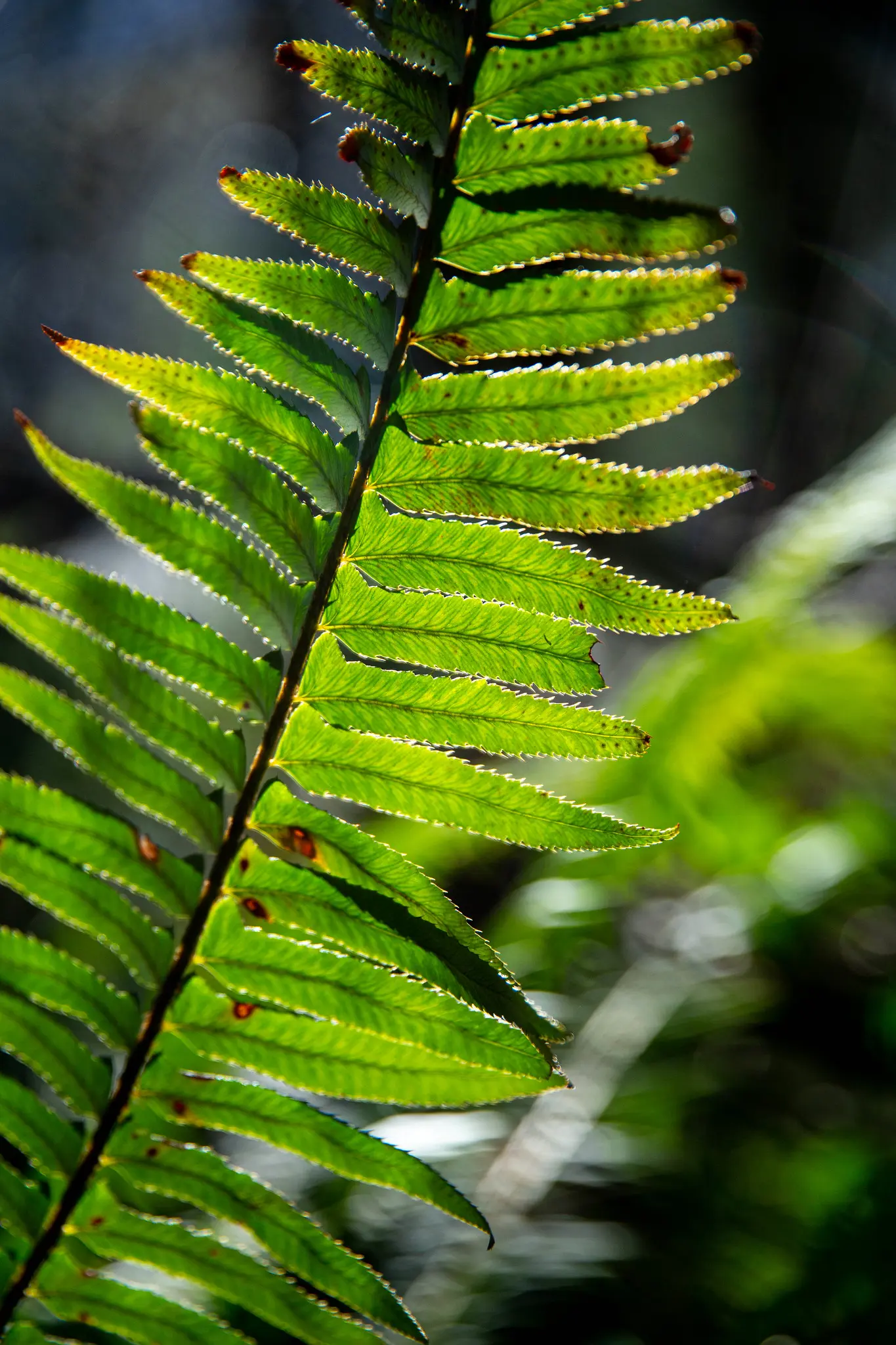
The maritime climate of the Arboretum fosters a temperate environment for an array of plants. Under the canopy of trees and shrubs the trails are flanked by sword ferns and a varied coat of moss that covers everything from the trunks of overhanging trees to rock outcrops and fallen logs. During summer, blue Forget-me-not flowers contrast with the predominantly green leaves, nodding in synchronisity with the breezes along the trail.