The Fungi Guide for the Sehome Hill Arboretum
With roughly 90 species of fungi found in the Arboretum, it’s a biodiverse cornucopia! The most prevalent species can be seen with little effort, but some hide under shrubs and logs or high up on trees. Be careful to stick to the trails to minimize damage to undergrowth. A lot of important species can be trampled and new growth can’t occur if there is too much traffic outside the clearly marked trails.
Armillaria mellea “Honey Mushroom”
Honey Mushroom is an umbrella term for a family of mushrooms. The most common in the Arboretum is A. Ostoyae. We ask that any Honey Mushrooms in the Arboretum are not disturbed, as it can disrupt the ecosystem! As the mushroom feeds off white rot, it is almost always found at the base of a plant, where it decomposes the roots of a tree or plant. The mushroom grows in clusters and around stumps, fallen logs, and live plants. Usually, you find them late in the year when the rainy season returns. Hallmarks of the Honey Mushroom family are a shadow in the center of the cap, and decurrent, or running down the stalk, gills.
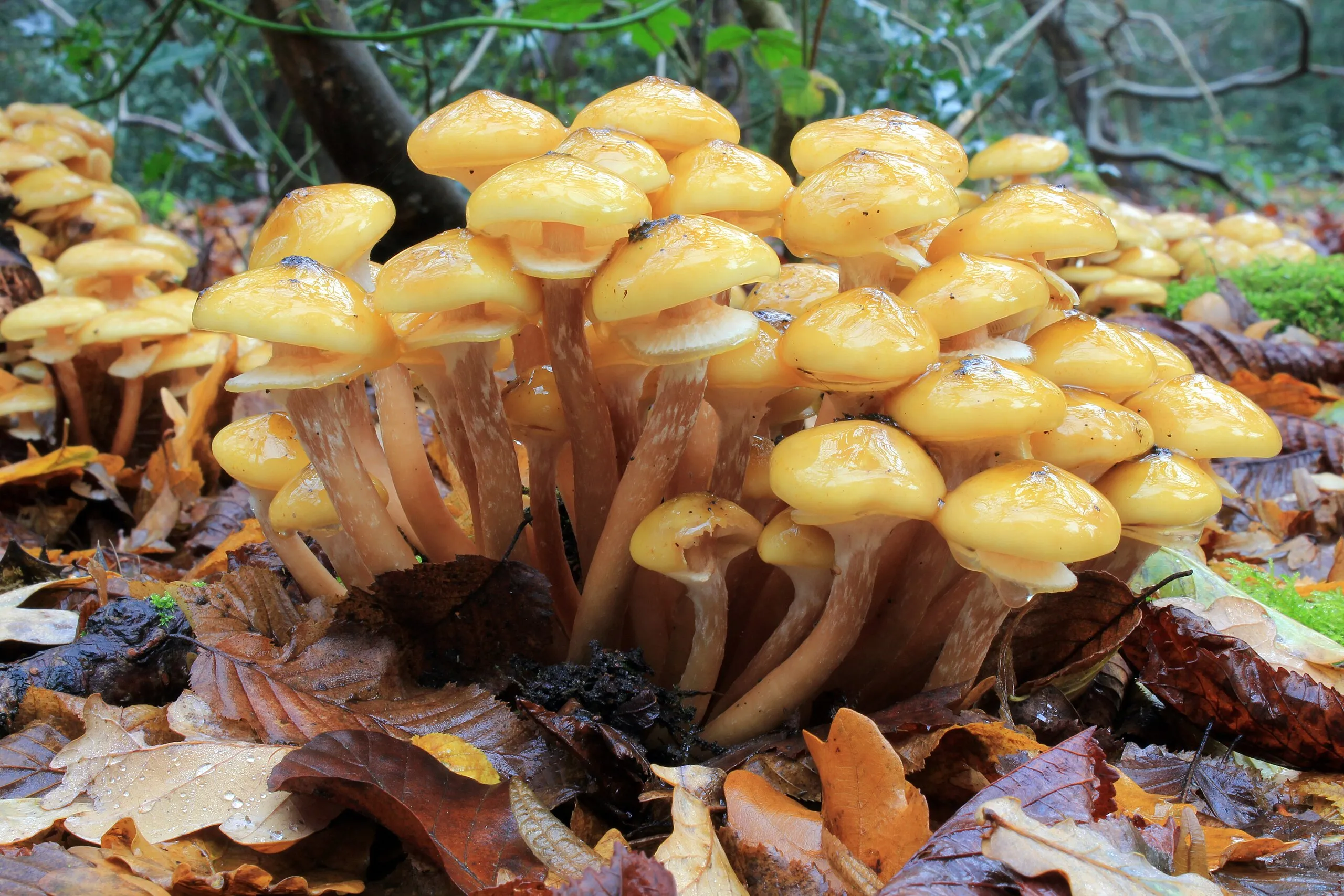
Image Credit: Stu's Images

Agaricus buckmacadooi “Buck’s Agaricus”
The Buck’s Agaricus was named after the National Mushrooms Association’s long time member Buck McAdoo in 2016. Toxic to humans, the Buck’s Agaricus smells like tar and has a wide, flat cap with a dark center. It can be found in partially decayed matter on the forest floor.
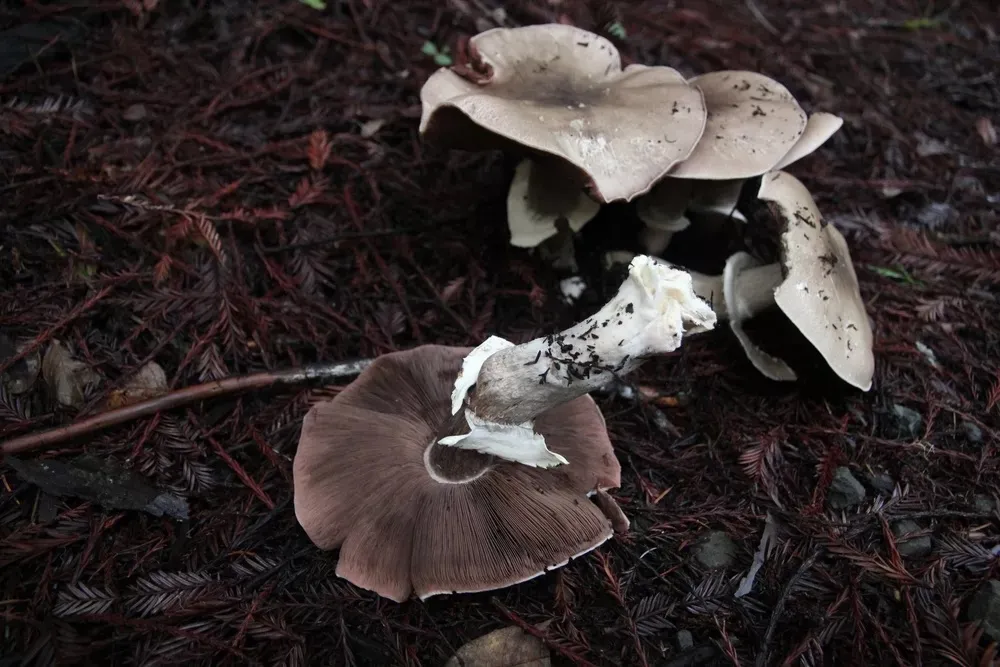
Image Credit: Christian Schwarz

Hypomyces lactifluorum “Lobster Mushroom”
While not actually a mushroom, the parasitic ascomycete fungus grows on some species of mushroom and turns them a red-orange color, similar to a cooked lobster. The fungus attacks milk-caps and brittlegills, notably the chanterelle. The chanterelle is common in this region but has not been spotted in the Arboretum.
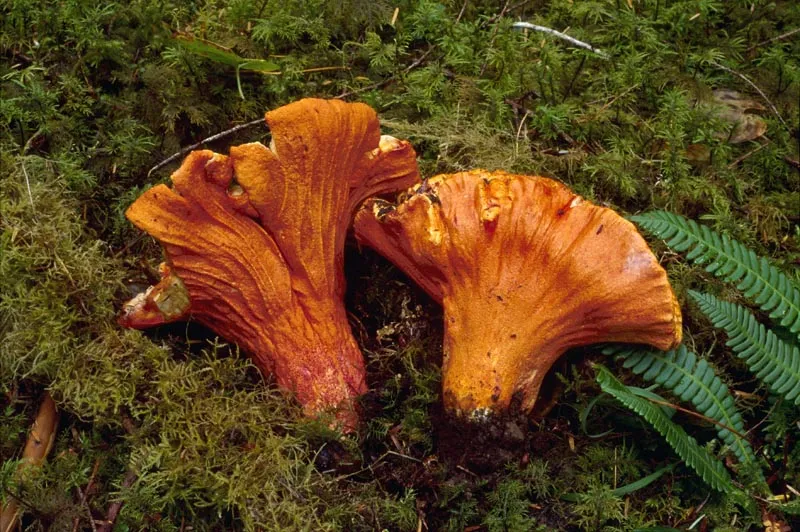
Photo Credit:Steve Trudell
Trametes versicolor “Turkey-tail”
These flat, fan-shaped mushrooms grow on the sides of logs and trunks. The shape and multicolored rings resemble a turkey tail, hence the name. Like the Honey Mushroom, the Turkey-tail feeds off white rot and tends to be found on dead trees. Playing an important role in decomposition, Turkey-tail turns wood’s lignin into a white gooey cellulose. The cellulose, which is the main part of a plant’s cell wall, can be reabsorbed into the soil, which allows nutrients to reenter the cycle again. lose can be reabsorbed into the soil now, which allows nutrients to reenter the cycle again.
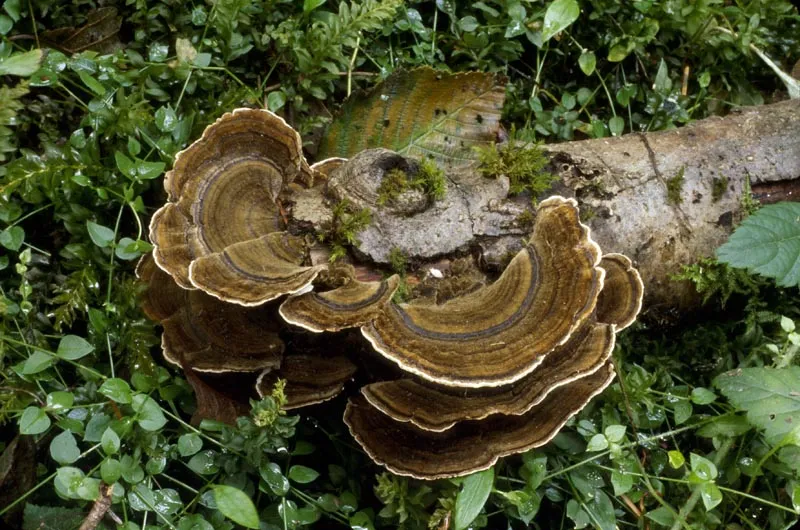
Photo Credit:Steve Trudell
Tremella mesenterica “Witch's Butter”
Resembling butter, Witch’s Butter goes by many names. The jelly-like yellow and orange fungus grows on logs and other dead deciduous wood. While considered edible, Witch’s Butter should not be harvested from the Arboretum. Witch’s butter is considered a parasite of a parasite and consumes a parasite that digests rotting wood. The yellow fungus is just a fruiting body and only shows up during warm spells in winter.
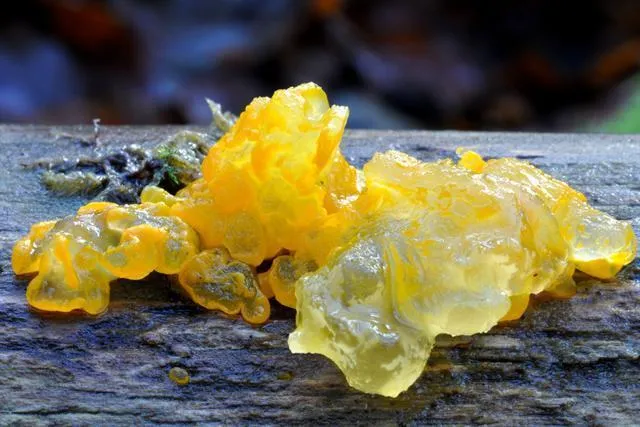
Photo Credit:BioPix