Student Work
Botanical Drawings from Technical Drawing (ID 110) Students in Spring 2025
Below are the drawings with the plant name, the artist credit, image description, and alt text.
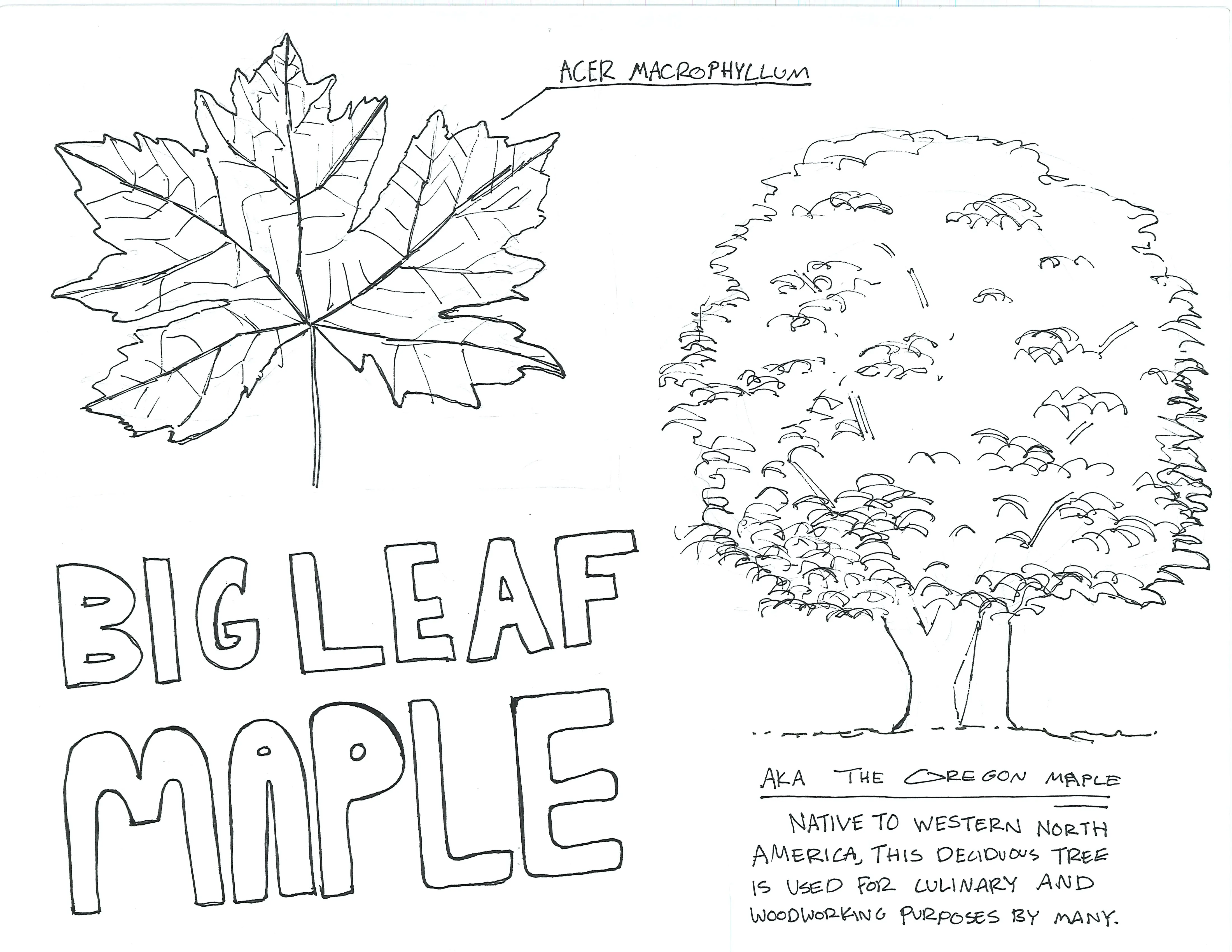
Big Leaf Maple (Acer macrophyllum), Uncredited, ID 110, Winter 2025
Native to North America, big leaf maples have thick-trunked bases and large leaves. Many people use these deciduous trees for culinary and woodworking purposes.
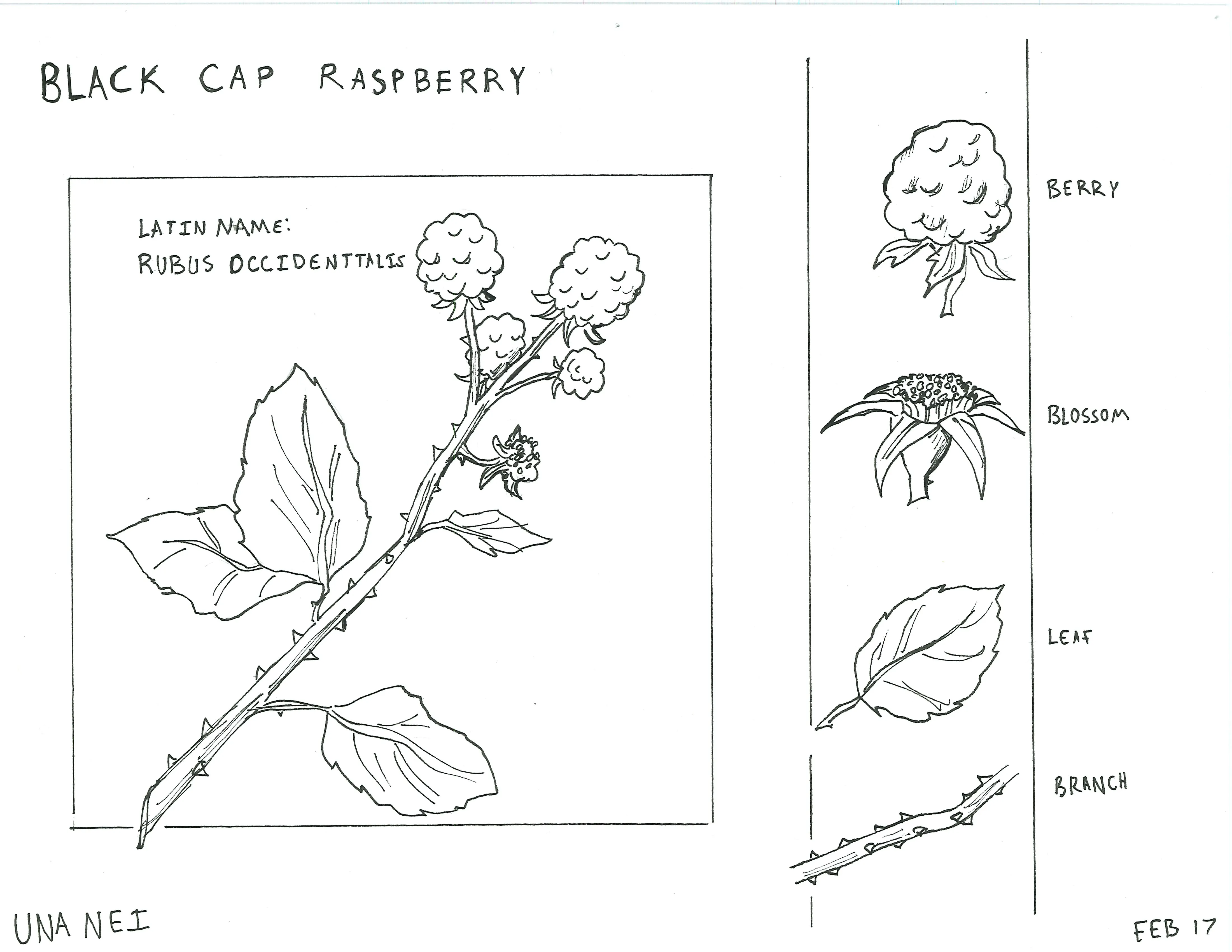
Blackcap Raspberry (Rubus occidentalis) by Una Nei, ID 110, Winter 2025
The blackcap raspberry is a thorny deciduous shrub native to eastern North America. Its small black ripe berries offer a sweet and tangy alternative to invasive blackberry plants.
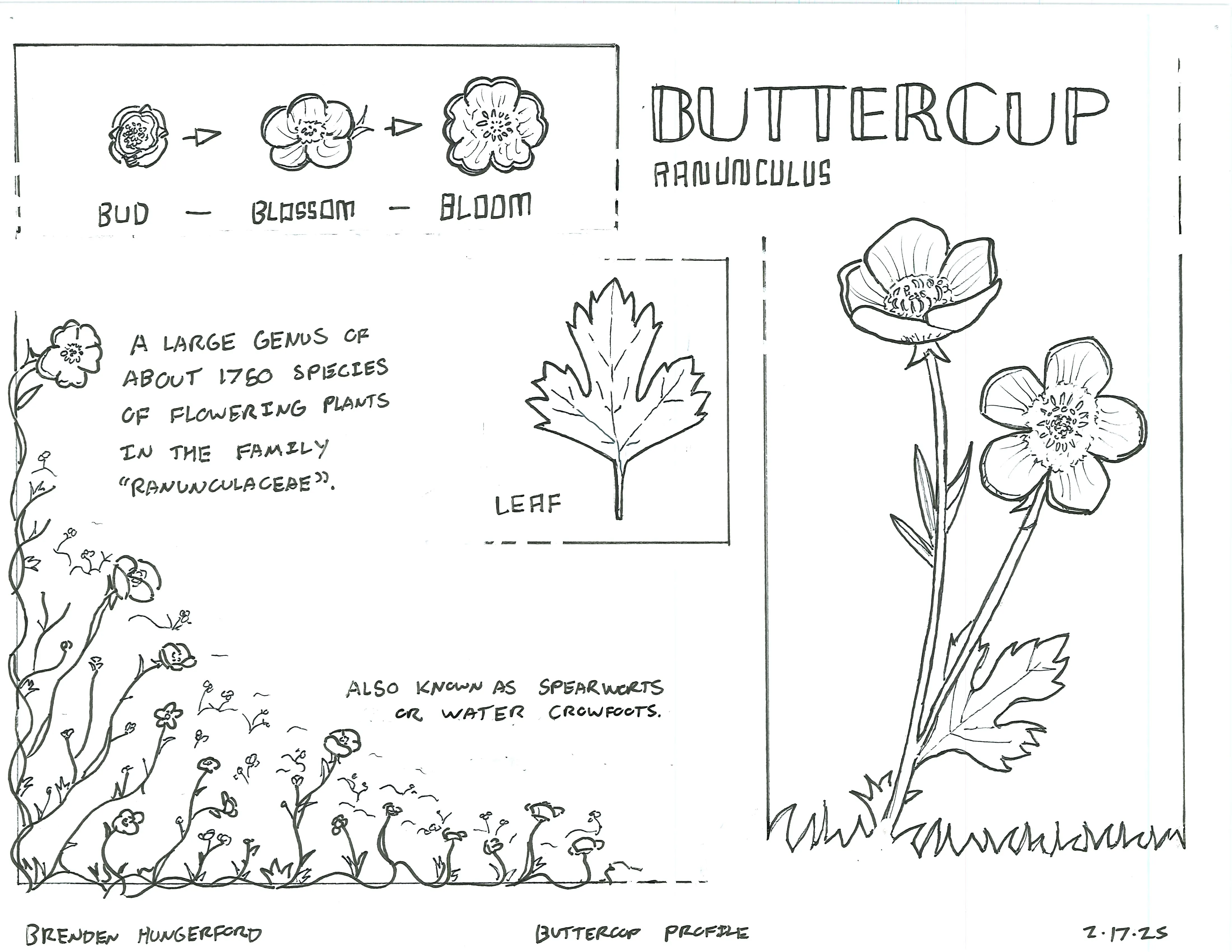
Buttercup (Ranunculus repens) by Brenden Hungerford, ID 110, Winter 2025
Buttercup, also known as “spearworts'” or “water crowfoots,” belongs to the large genus Ranunculus, which includes over 1,750 species in the Ranunculaceae family. This common weed features a thin stem, narrow leaflets, and a glossy golden flower that makes your chin glow yellow!
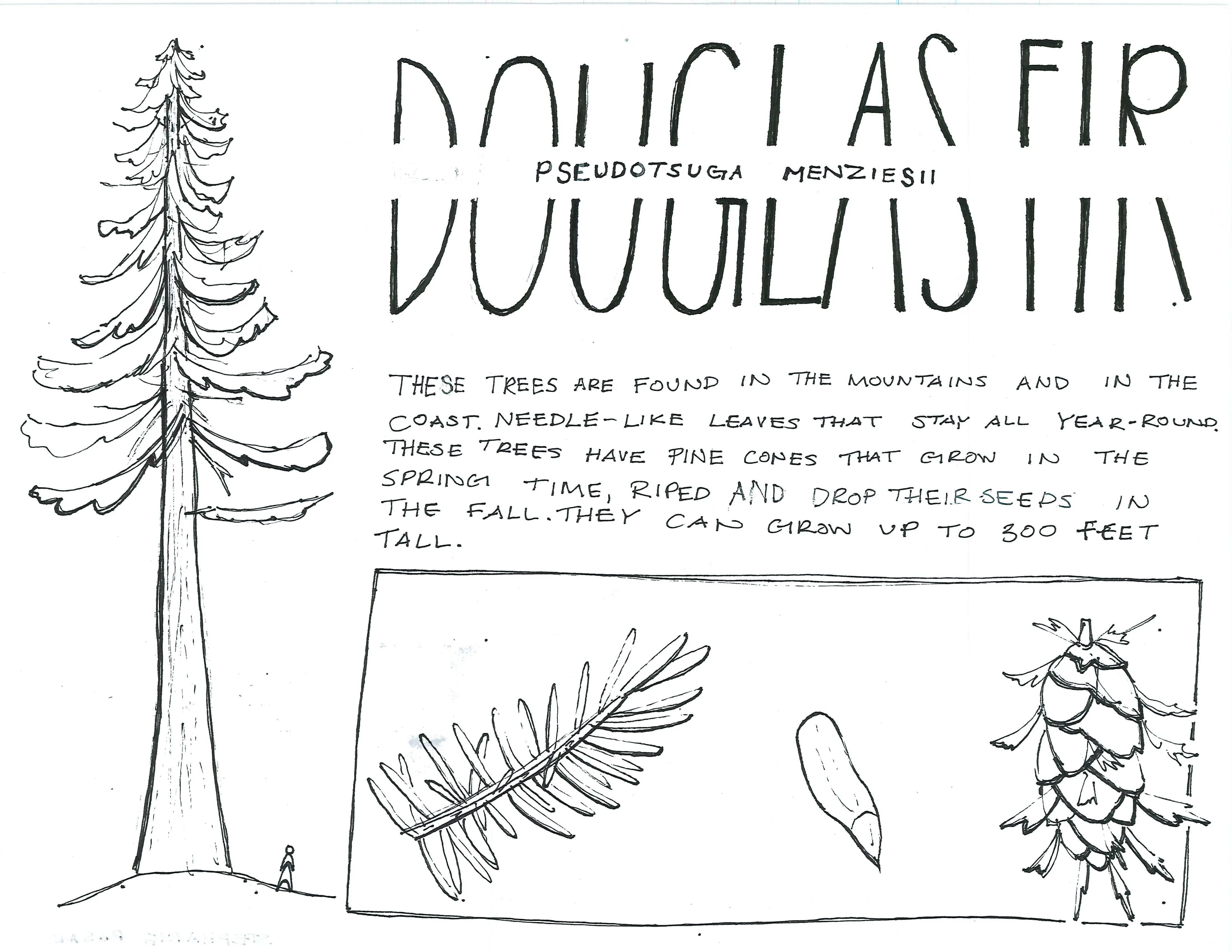
Douglas Fir (Pseudotsuga menziesii), Uncredited, ID 110, Winter 2025
Douglas Fir trees are an evergreen conifer species native to the mountains and coast of western North America. They produce needle-like leaves and pinecones that emerge in spring and drop in the fall. Growing up to 300 feet tall, they shape the Arboretum’s landscape into a “new” old-growth forest.
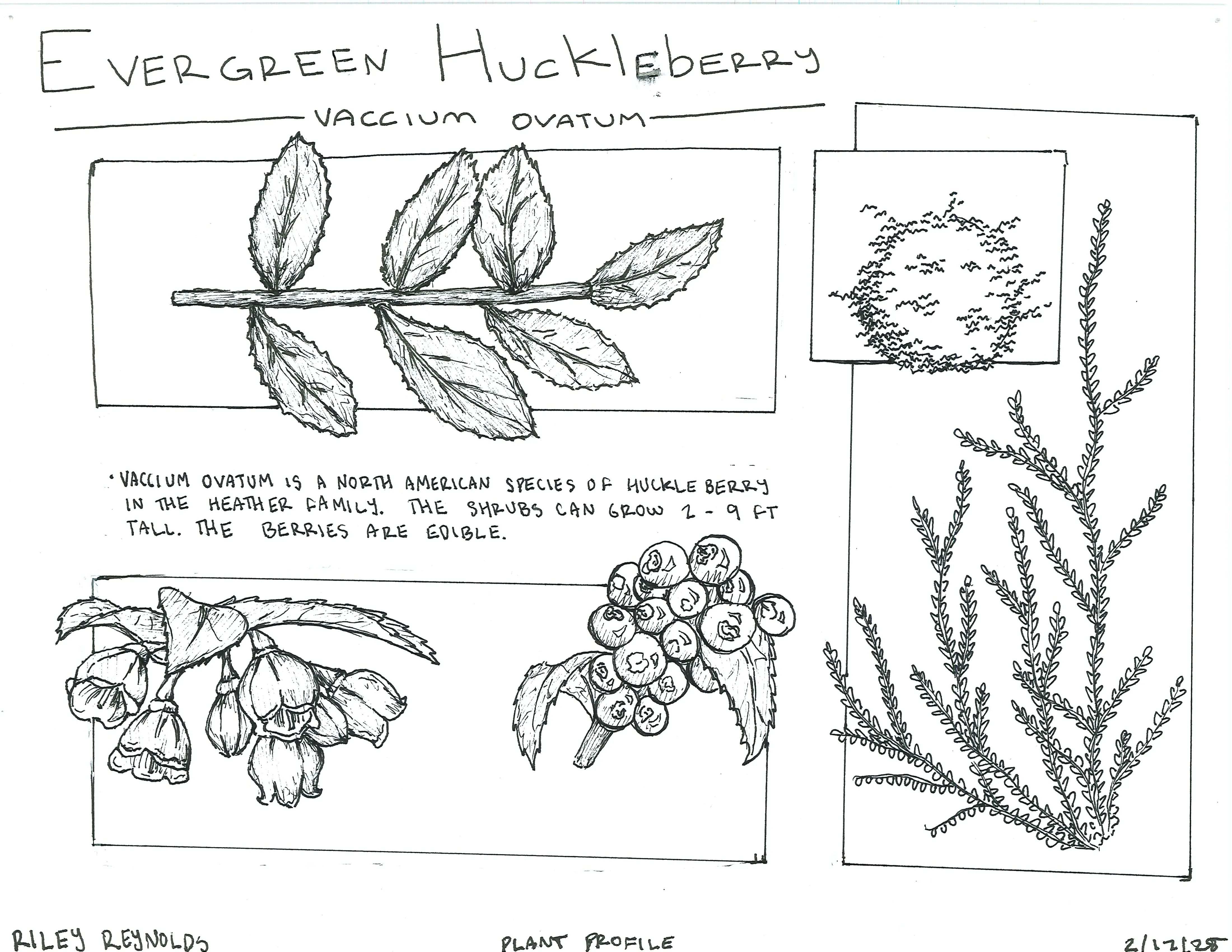
Evergreen Huckleberry (Vaccinium ovatum) by Riley Reynolds, ID 110, Winter 2025
Evergreen Huckleberry is a North American shrub that belongs to the heather family. Its small, dark-blue berries provide wildlife and visitors with a tart, tasty treat throughout the Arboretum from late fall to early winter.
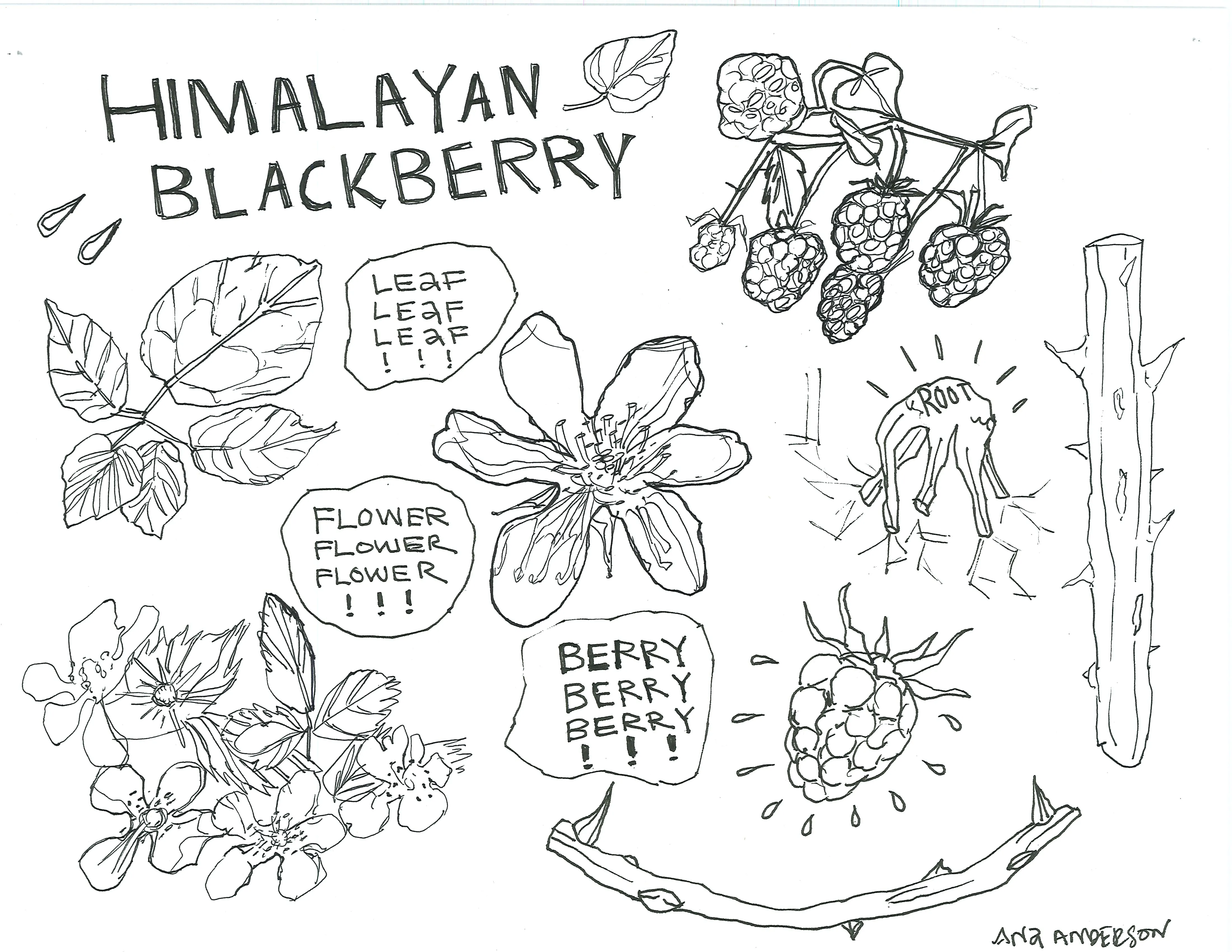
Himalayan Blackberry (Rubus armeniacus) by Ana Anderson, ID 110, Winter 2025
The Himalayan Blackberry is a thorny perennial plant native to Armenia and Northern Iran that acts as an invasive species worldwide.
Ivy (Hedera helix) by Adrienne McKenna, ID 110, Winter 2025
Ivy, an evergreen perennial vine native to Europe and parts of Asia, originally arrived in North America as ornamental ground cover. However, it has spread aggressively, invading forests, parks, and other green spaces ultimately threatening local ecology.
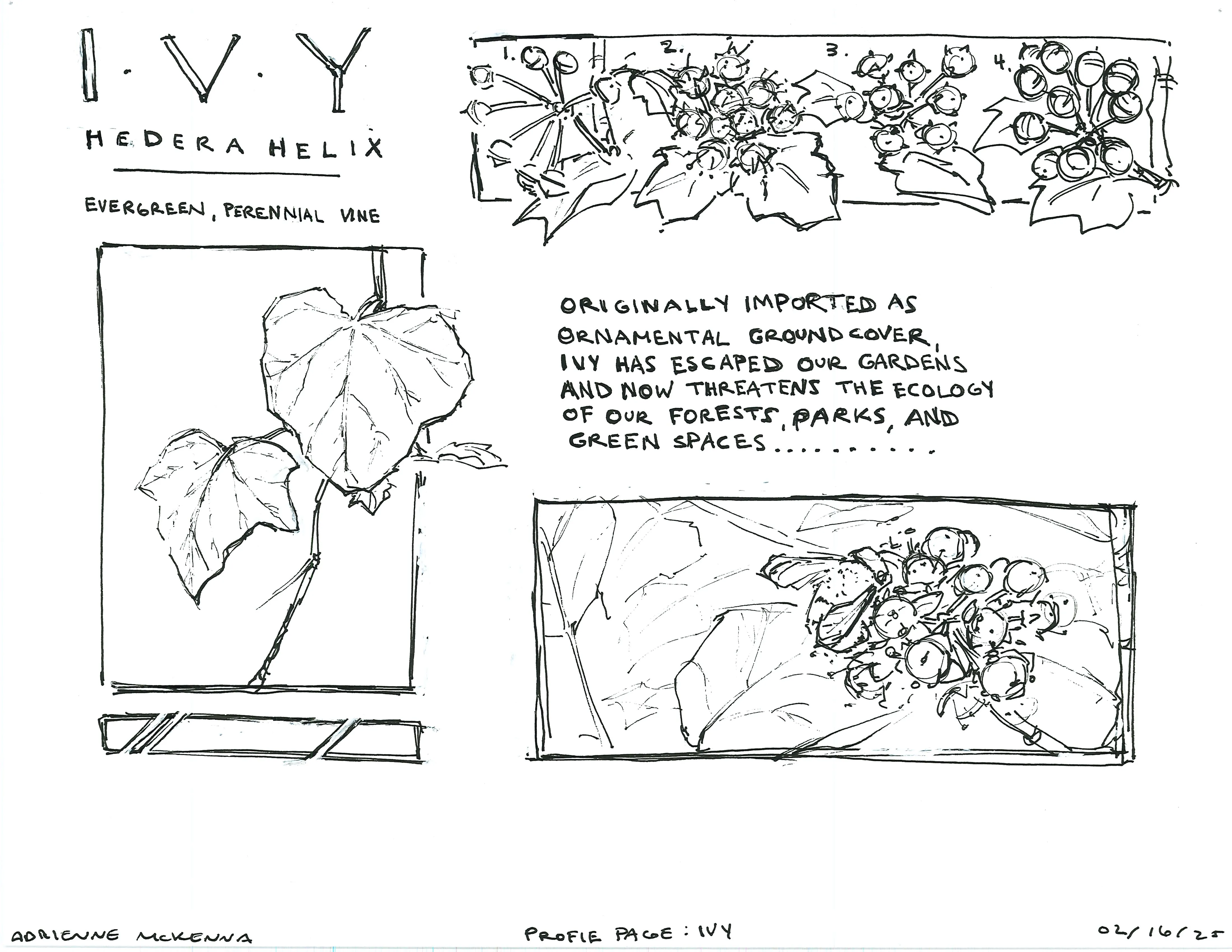
Morning Glory (Ipomoea purpurea) by Maya Weakley, ID 110, Winter 2025
Morning glory’s Latin name Ipomoea comes from the Greek words “ips” for “worm” and “homoios” for “like” because of the plant’s worm-like stem. Its purple trumpet-shaped flowers weave around structures such as buildings and trees throughout the Arboretum. Historically, people in China have used its seeds as a laxative, and in large doses, the seeds produce psychedelic effects.
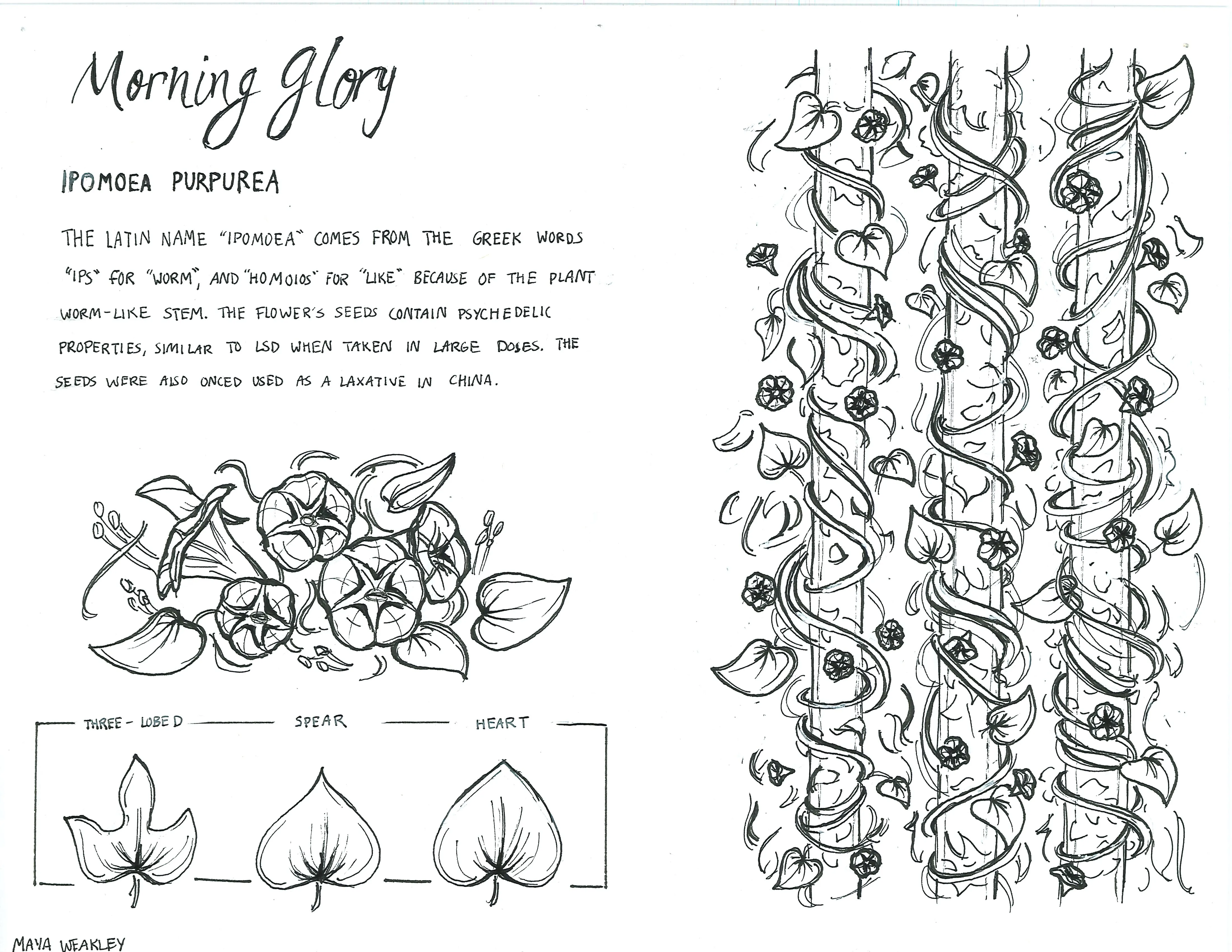
Ocean Spray (Holodiscus discolor) by Uncredited, ID 110, Winter 2025
Ocean spray grows in open forests like the Arboretum and is native to British Columbia and Southern California. Its spiked leaves and clustered small white flowers bloom with a sweet scent from June to July. Also called “ironwood,” this plant provided Indigenous peoples with durable wood for utensils, tools, and other purposes.
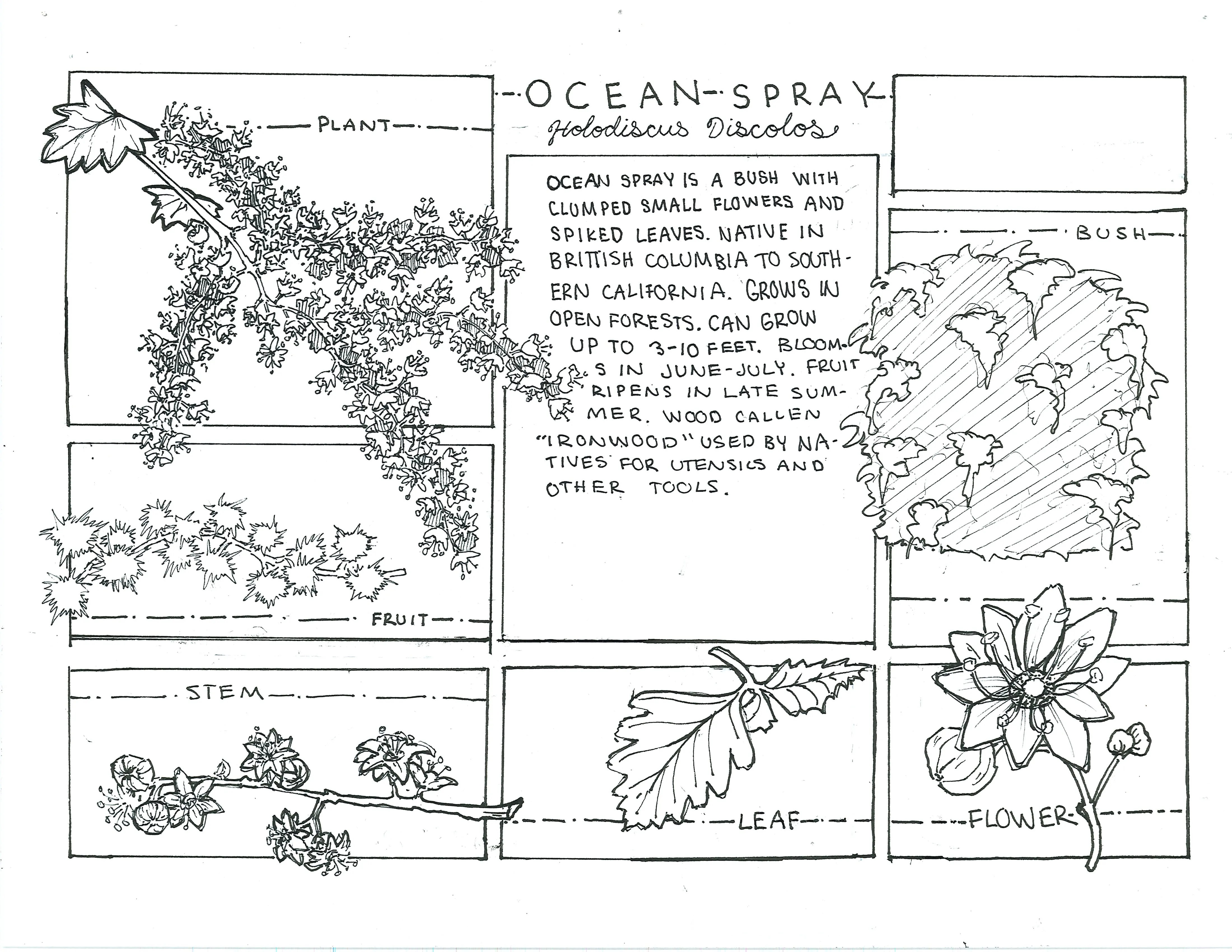
Oregon Grape (Berberis aquifolium) by Dani M.-S., ID 110, Winter 2025
The Oregon Grape, which is Oregon’s state flower, is an evergreen shrub with spiny leaves. It blooms with small yellow flowers in early spring that develop into dark blue berries.
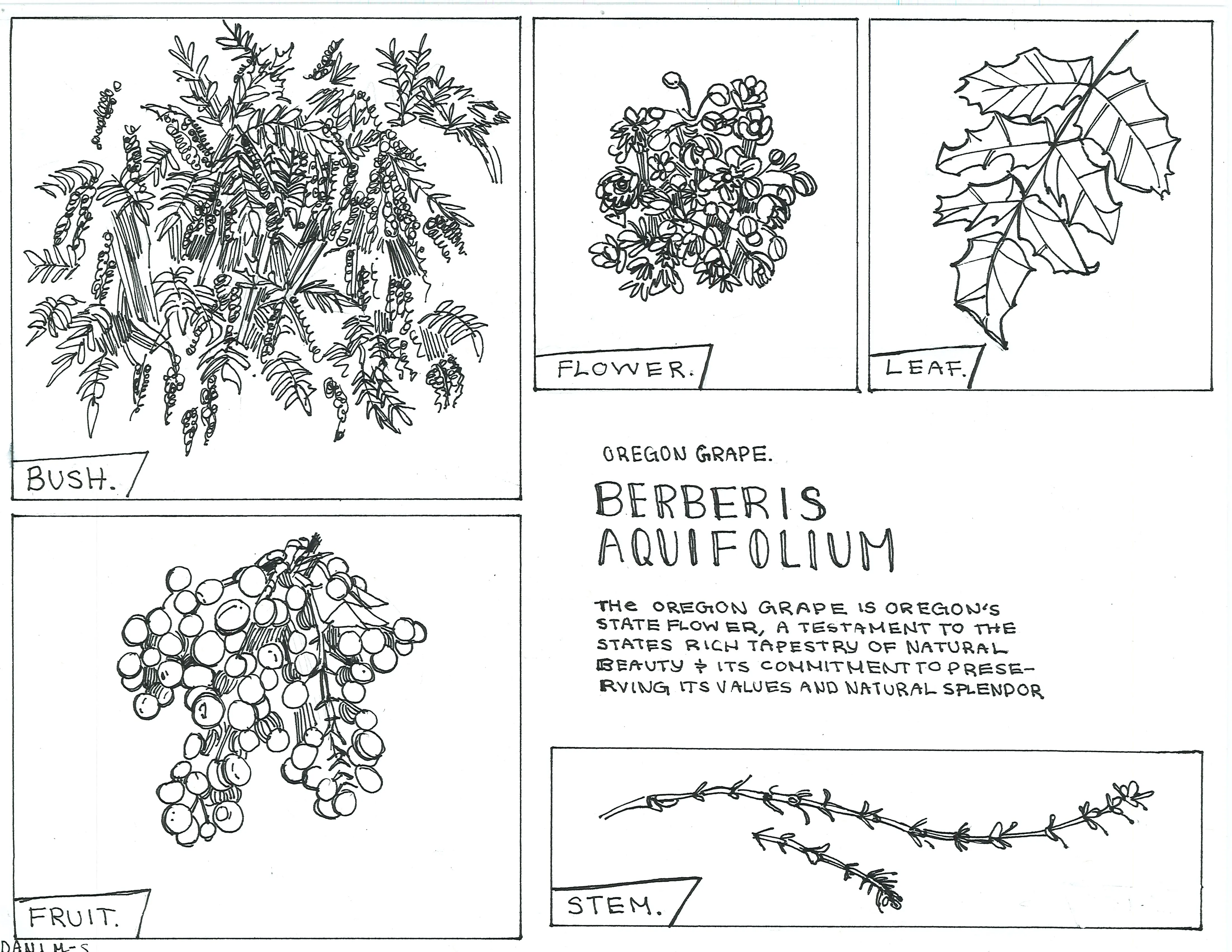
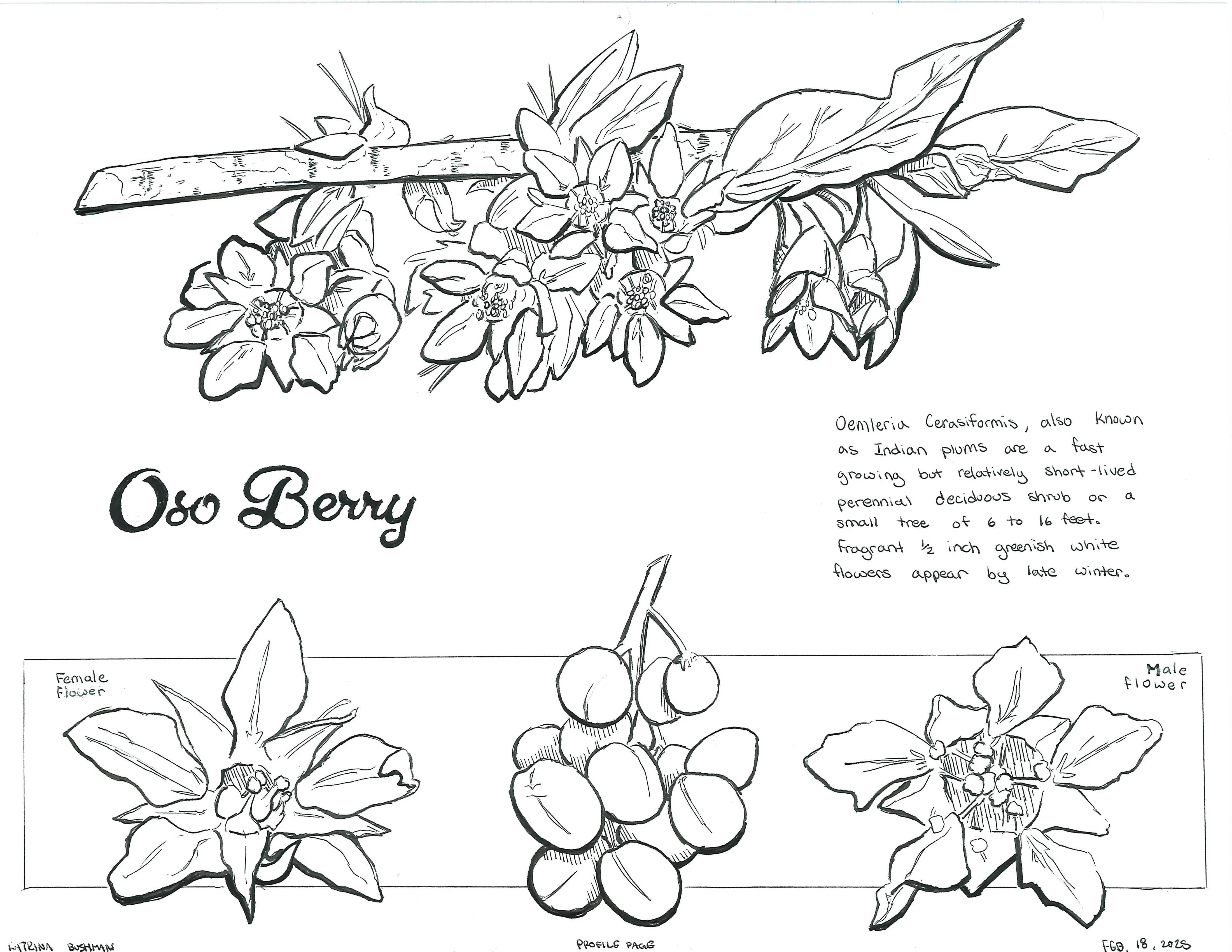
Oso Berry (Oemleria cerasiformis) by Katrina Bushman, ID 110, Winter 2025
Oso berry is a fast-growing shrub with reddish-brown twigs that boast oblong leaves and, when in bloom, a fragrant white flower and bitter plum fruit.
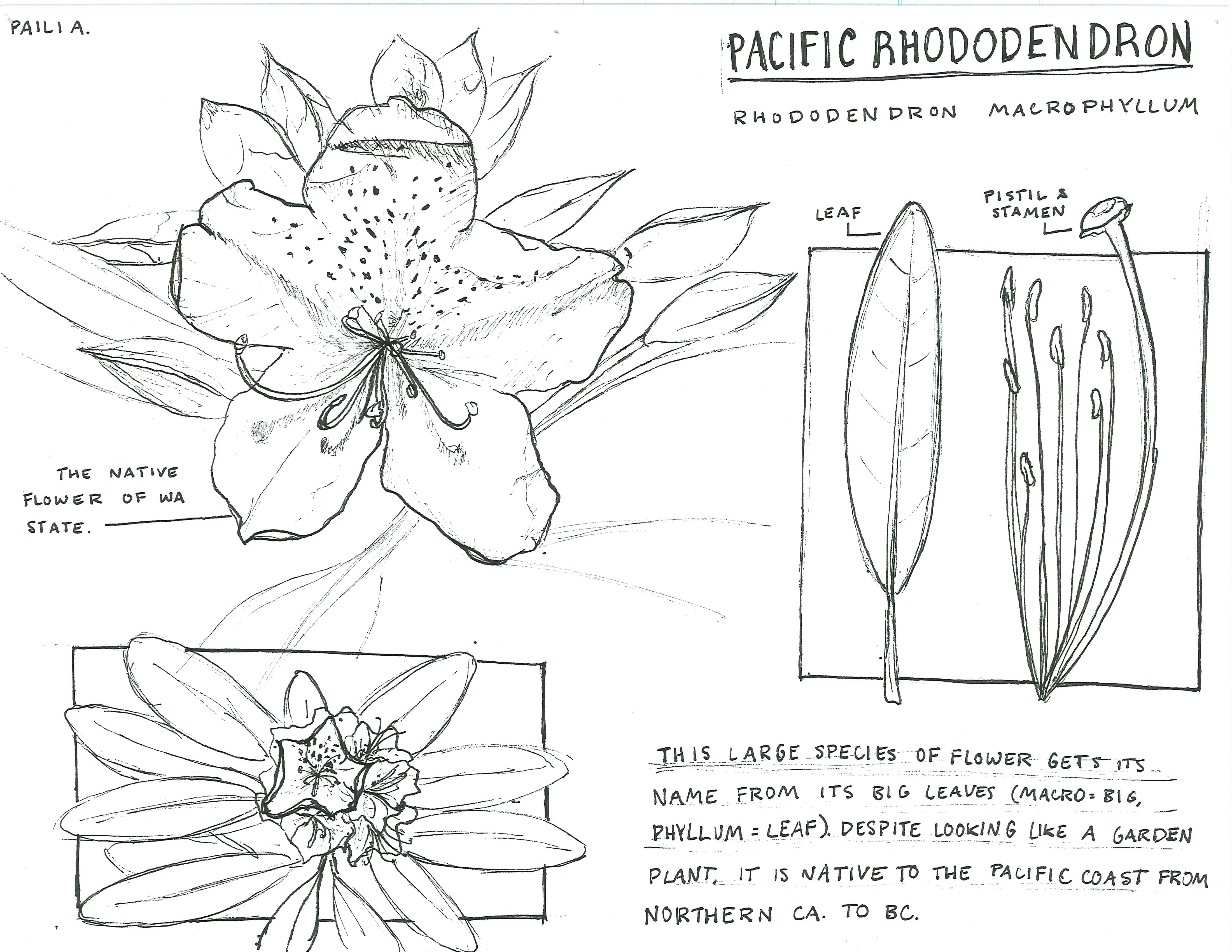
Pacific Rhododendron (Rhododendron macrophyllum) by Pauli A., ID 110, Winter 2025
The Pacific rhododendron, Washington state's official flower, signals the arrival of spring with its multi-colored flowers blooming in large, tall patches across the Arboretum.
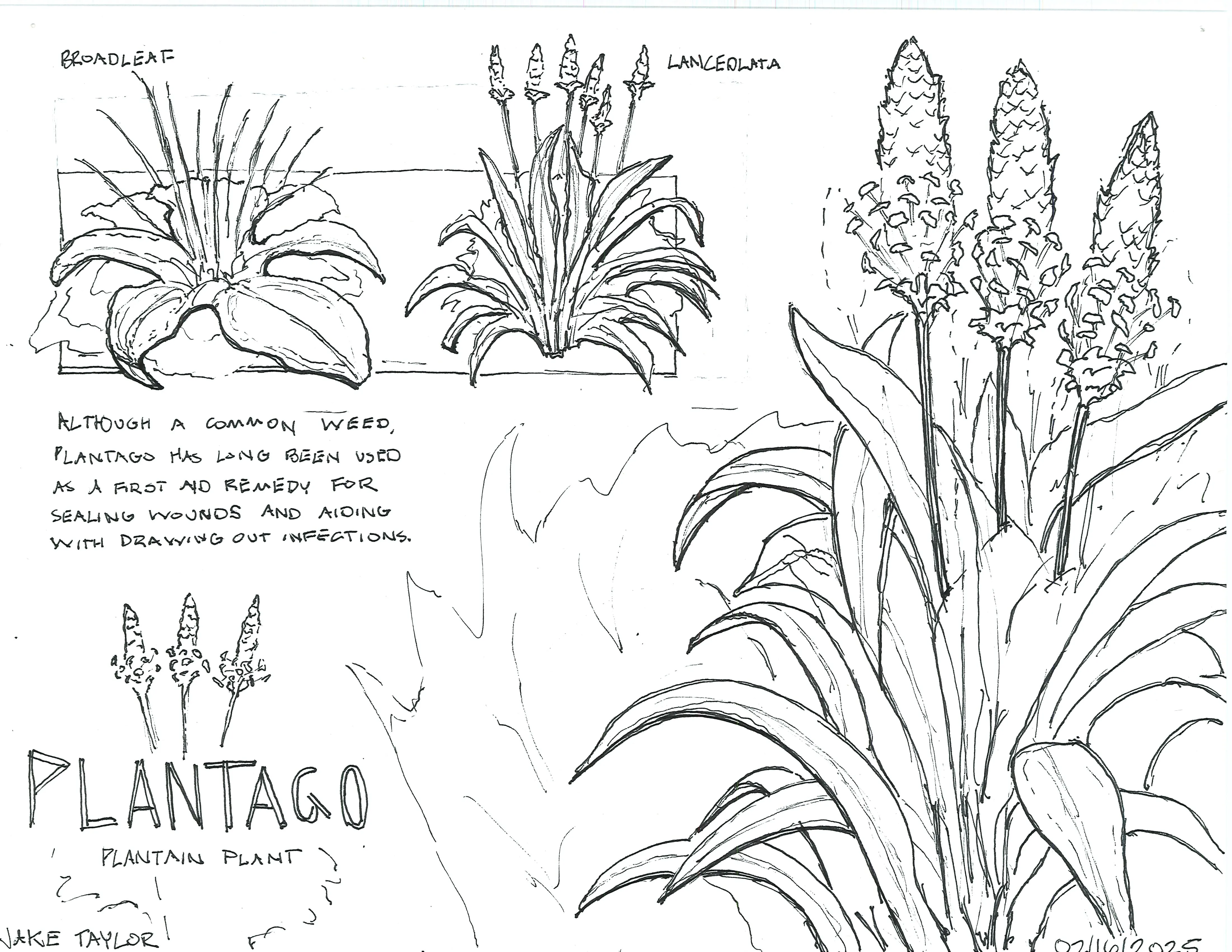
Plantain (Plantago lanceolata) by Jake Taylor, ID 110, Winter 2025
The plantain plant is a common weed that grows in meadows, gardens, and lawns, flowering year-round. Indigenous populations have long used it as a first aid remedy to seal wounds and draw out infections.
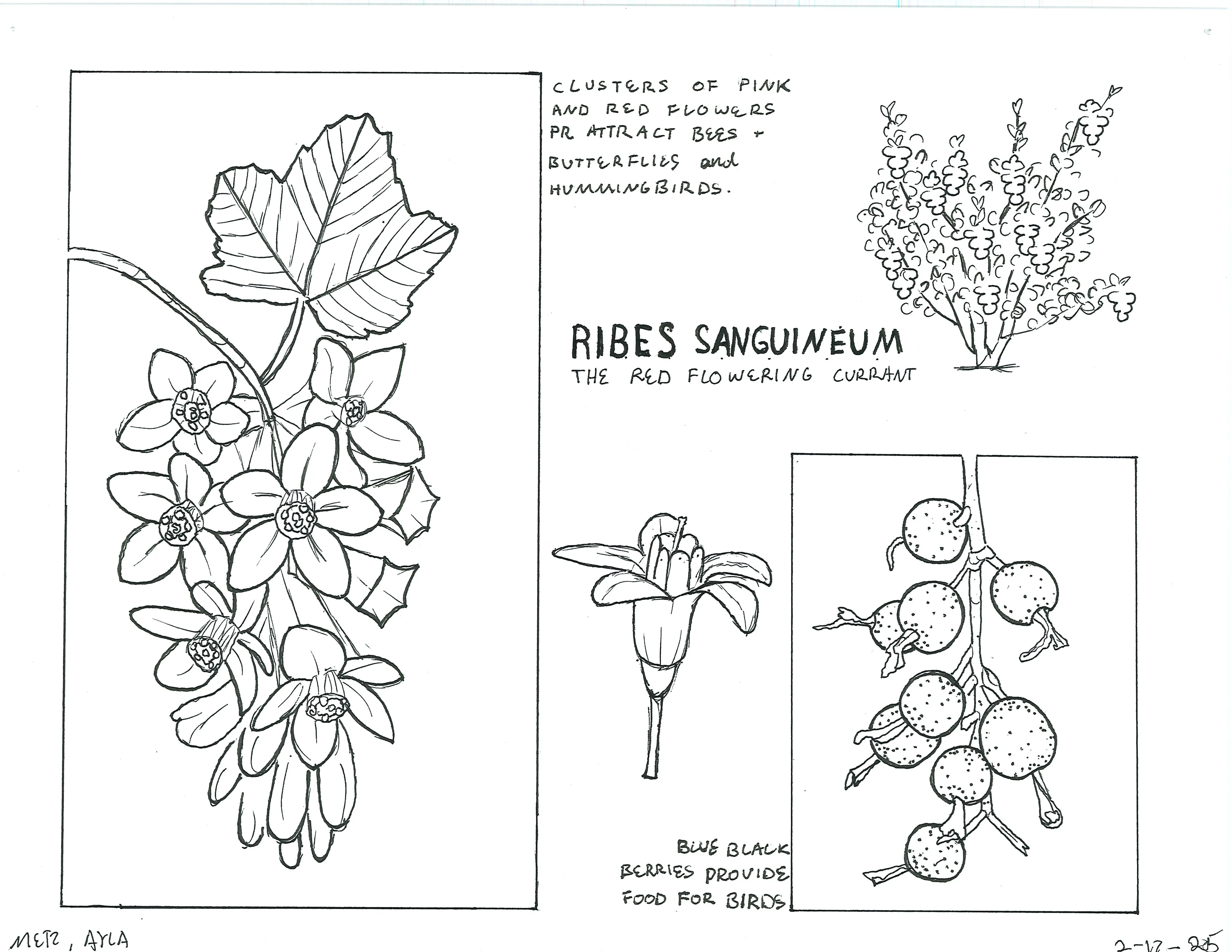
Red Flowering Currant (Ribes sanguineum) by Ayla Metz, ID 110, Winter 2025
The red flowering currant blooms with clusters of pink and red flowers that attract pollinators like bees, butterflies, and hummingbirds. These become blue-black berries that provide food for birds.
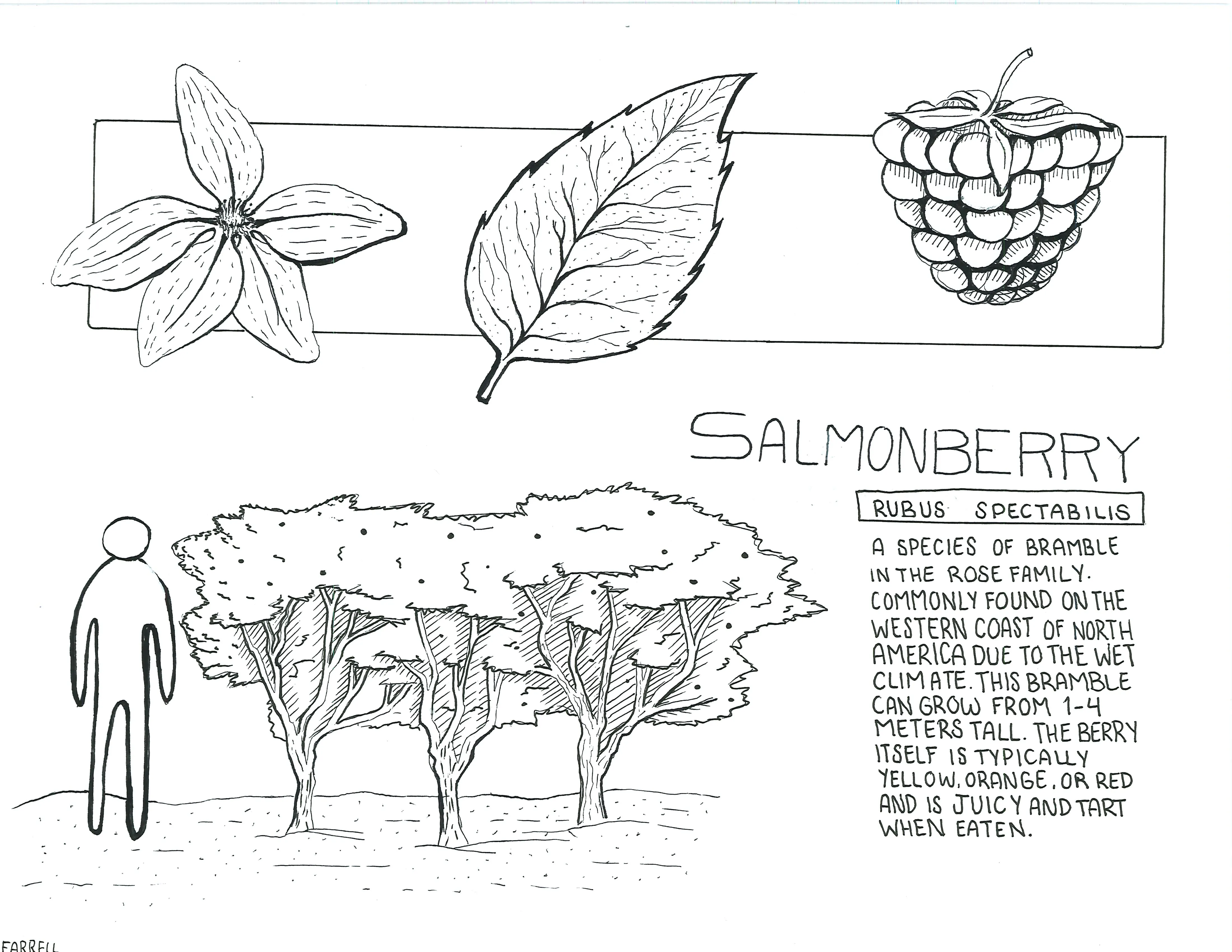
Red Huckleberry (Vaccinium paruifolia), Uncredited, ID 110, Winter 2025
The red huckleberry, a deciduous shrub native to western North America, grows bright green shoots and ovate leaves that produce edible red berries. Birds, bears, small mammals, and humans enjoy the fruit.
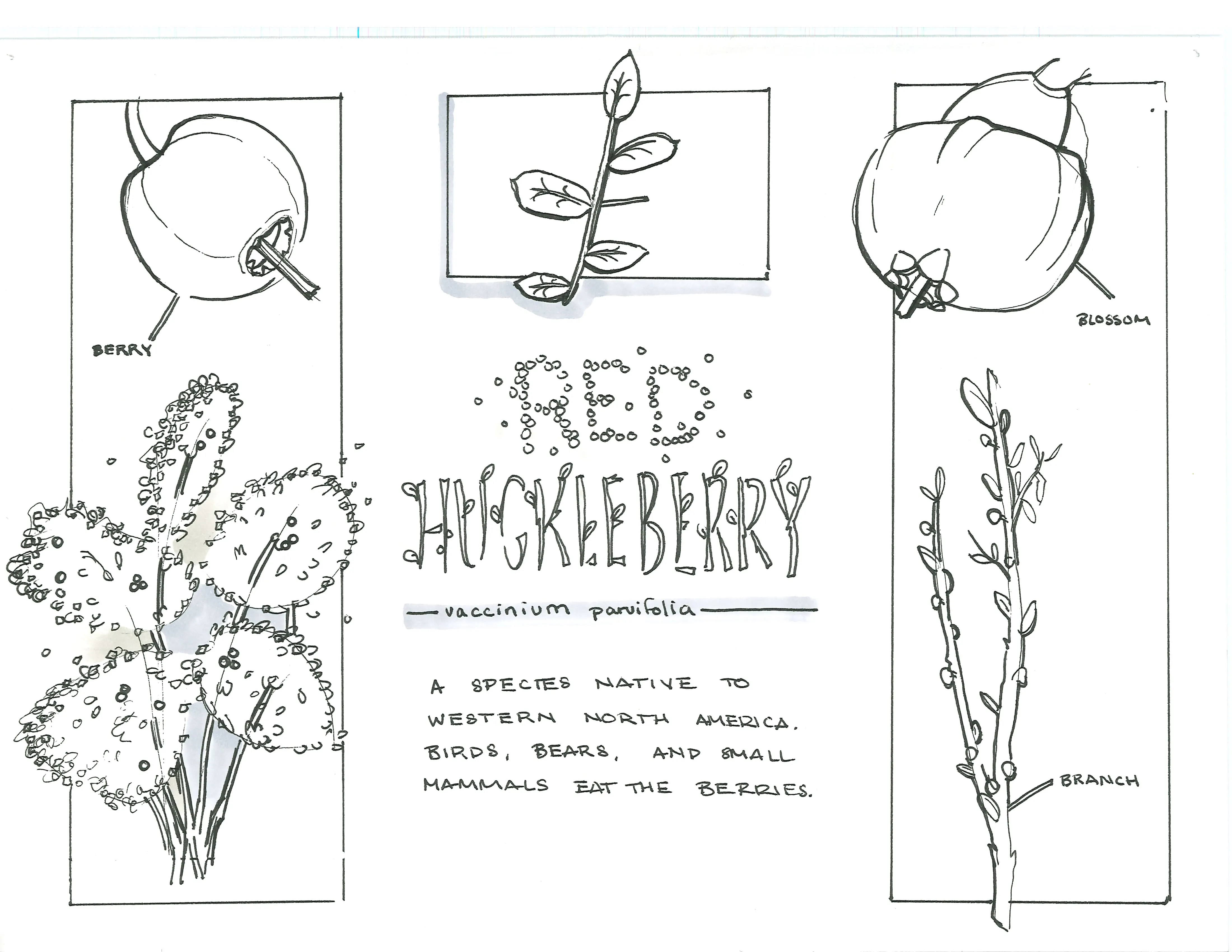
Red Osier Dogwood (Cornus sericea) by Phoebe Setter, ID 110, Winter 2025
The red osier dogwood is a sticky red shrub in winter. In late May or early June, its flowers bloom, then become berries during late summer. This plant is commonly found in wet North American areas and can grow to be seven to nine feet tall. Many species of birds eat its berries.
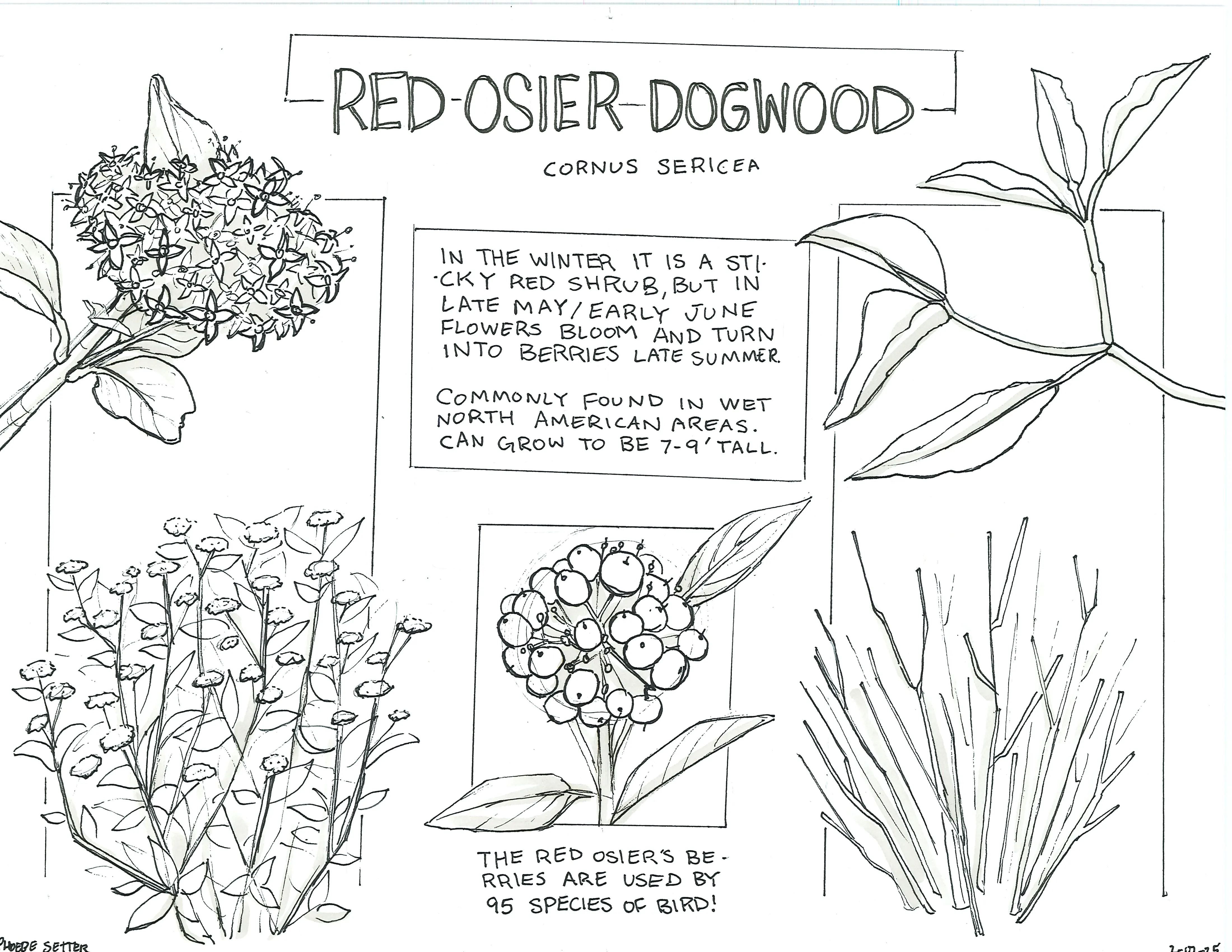
Salal (Gaultheria shallon) by Ella Thompson, ID 110, Winter 2025
Salal is a resilient evergreen shrub native to North America’s Pacific coast. It grows leathery, glossy leaves and reddish to blue berries that are edible but bland. The salal can grow up to ten feet, but averages at two to four feet.
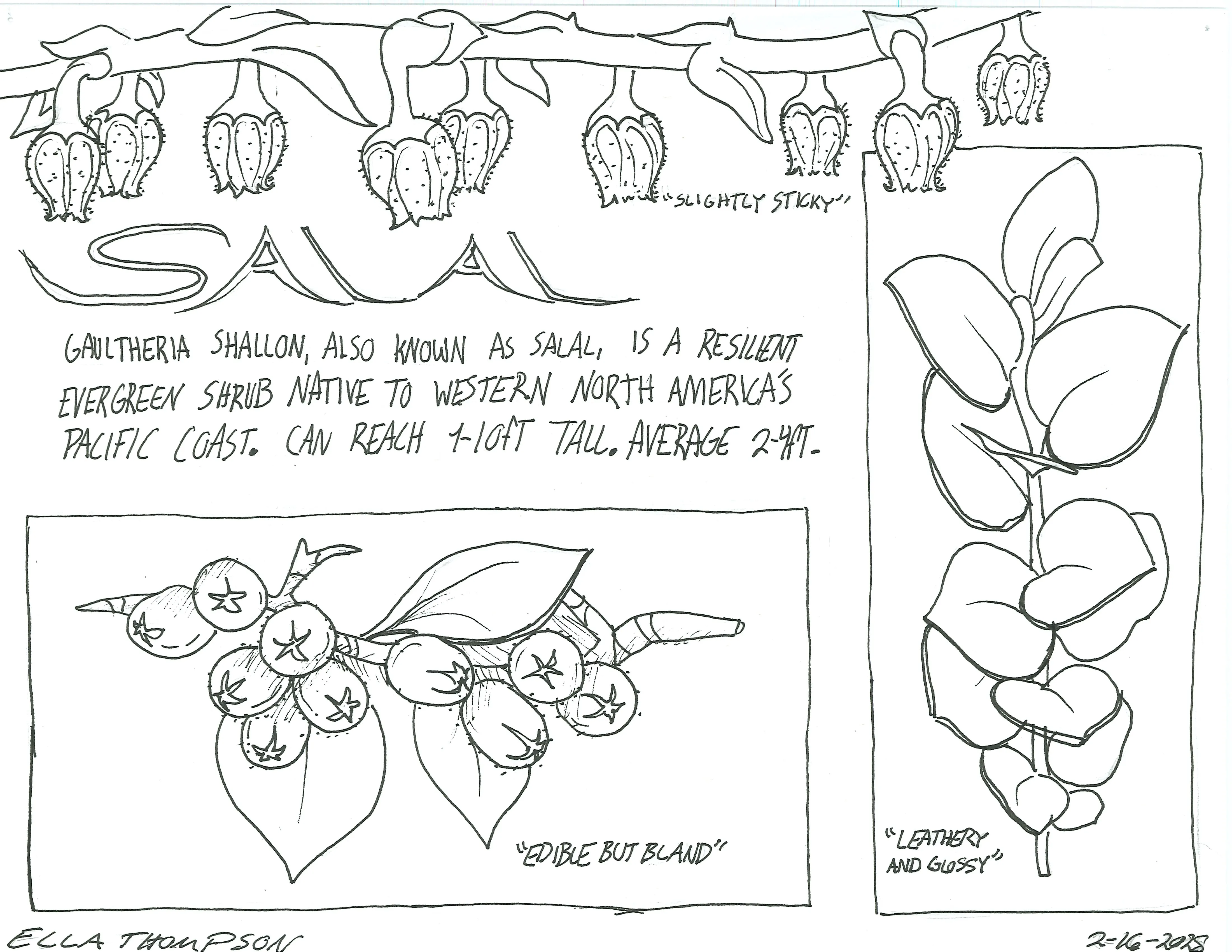
Salmonberry (Rubus spectabilis) by Farrell, ID 110, Winter 2025
The salmonberry, a species of bramble in the rose family, typically grows to the height of an average adult but can reach 1–4 meters tall. It thrives in wet environments of North America's western coast. Wildlife pollinates its flowers, allowing it to produce tart and juicy berries in yellow, orange, or red. From early May to late July the Salmonberry can be prolific and bountiful in the Sehome Hill Arboretum if you know where to look.
Scotch Broom (Cytisus scoparius), Uncredited, ID 110, Winter 2025
Scotch Broom has rigid stems and numerous green shoots that display yellow flowers in the spring. In late summer, the Scotch Broom legume throws seeds onto the ground, effectively spreading across North America. This fast-growing shrub often outcompetes native vegetation and should be ecologically maintained to ensure native plants are able to thrive in our precious forested land on the Sehome Hill Arboretum. >/p>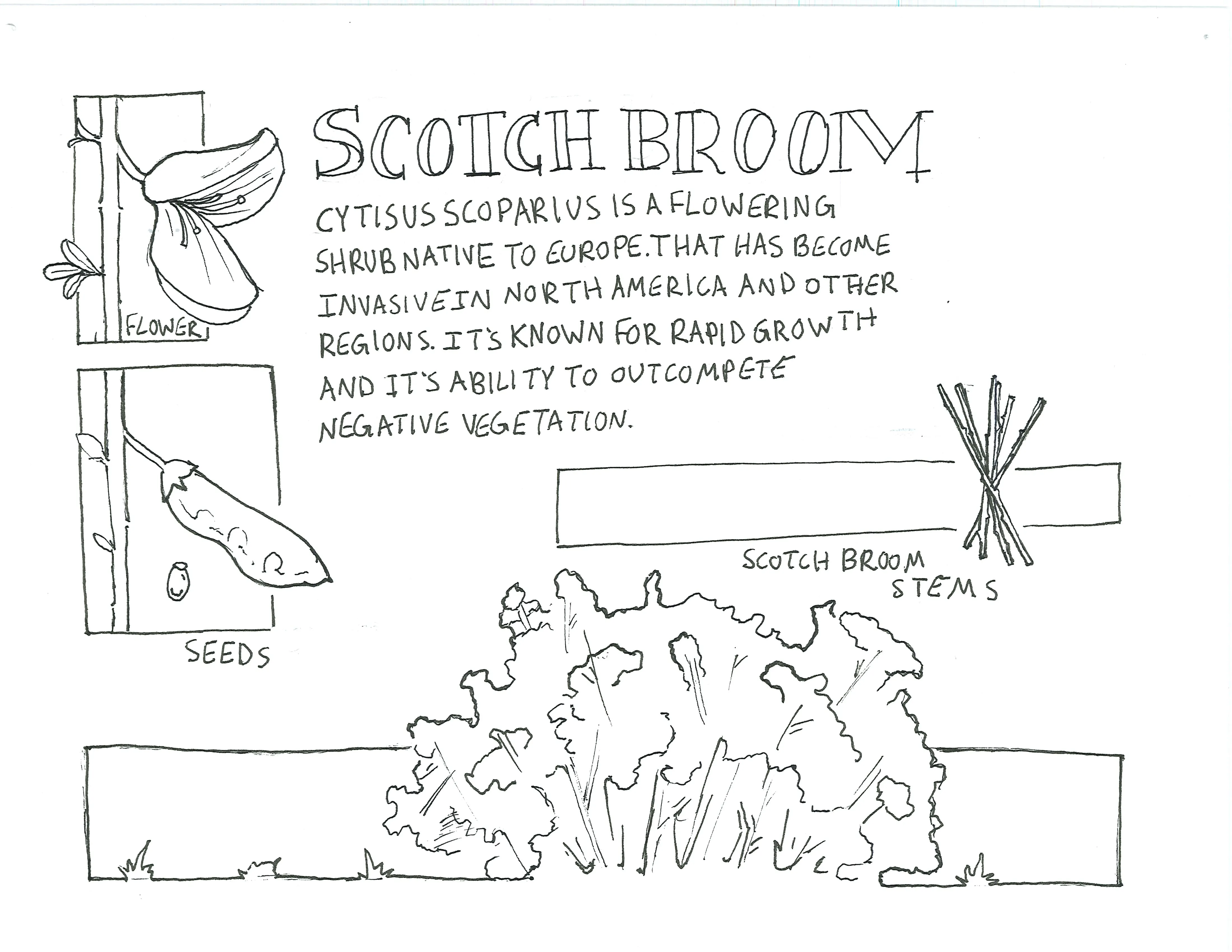
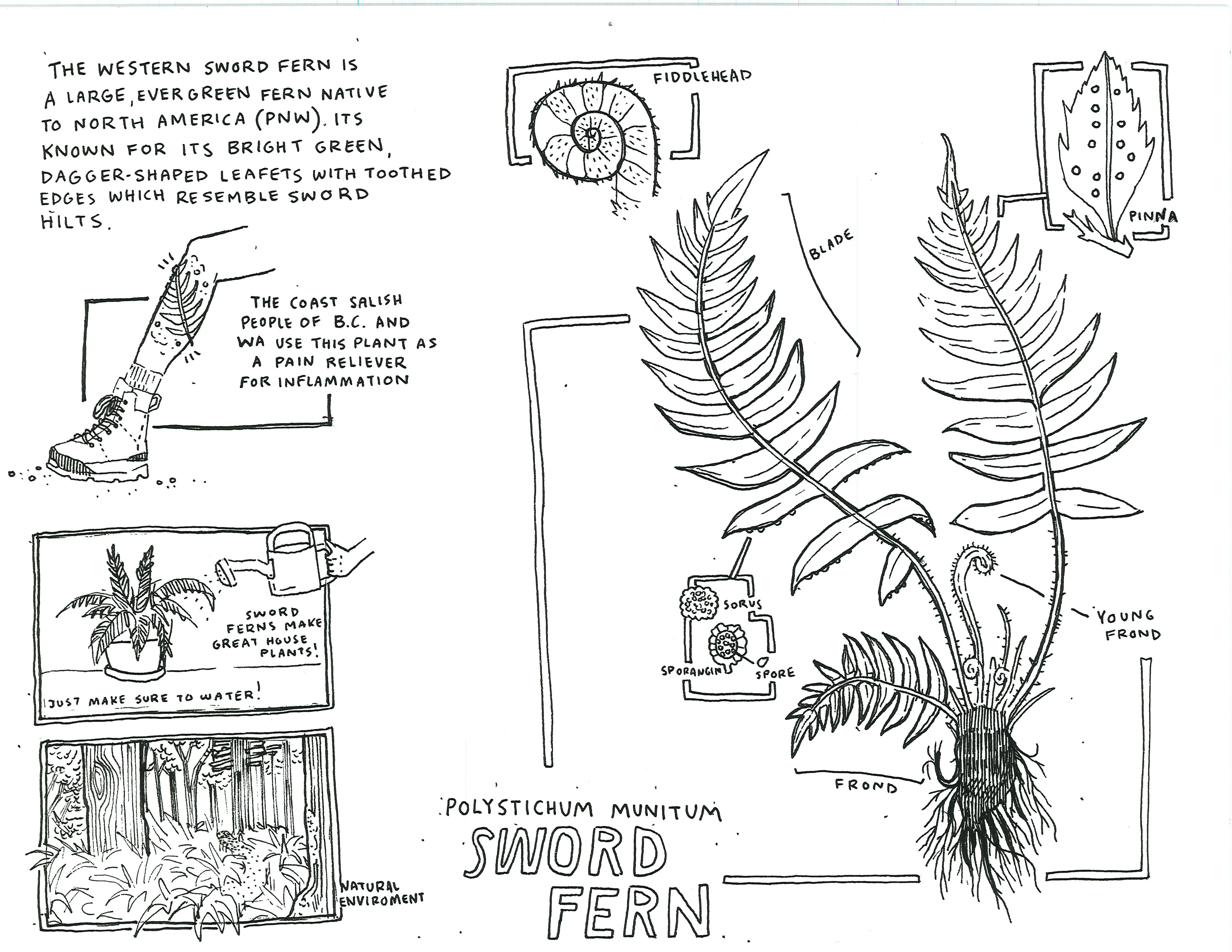
Sword Fern (Polystichum munitum), Uncredited, ID 110, Winter 2025
The sword fern, native to the Pacific Northwest, gets its name from its dagger-shaped leaves with toothed edges. People grow them as houseplants, and the Coast Salish use them to relieve pain and inflammation.
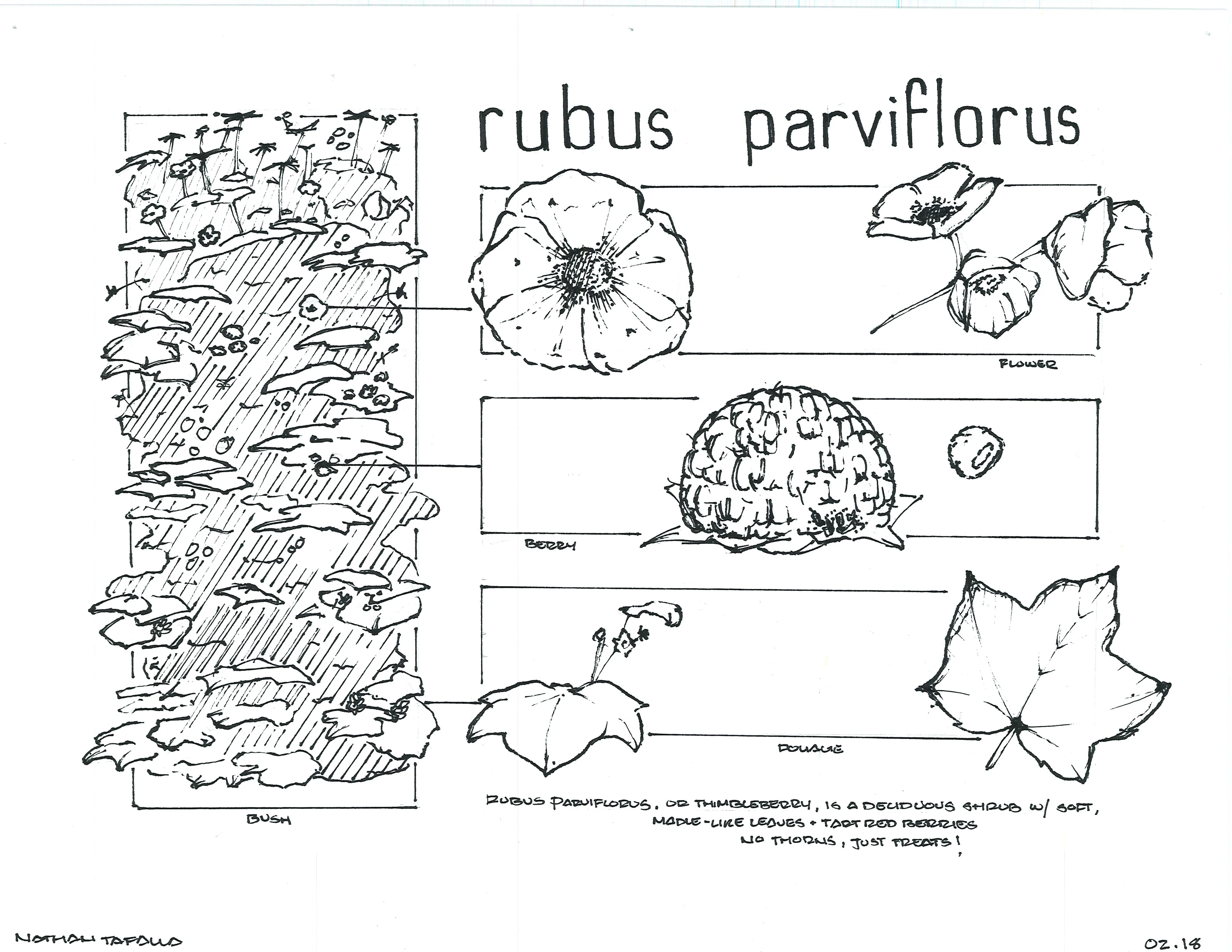
Thimbleberry (Rubus parviflorus) by Nathan T., ID 110, Winter 2025
The Thimbleberry is a deciduous shrub that produces hollow, tart red berries which Pacific Northwesterners enjoy. Its large, soft leaves and thornless branches create a distinctive look, in congruence with its tasty fruit.
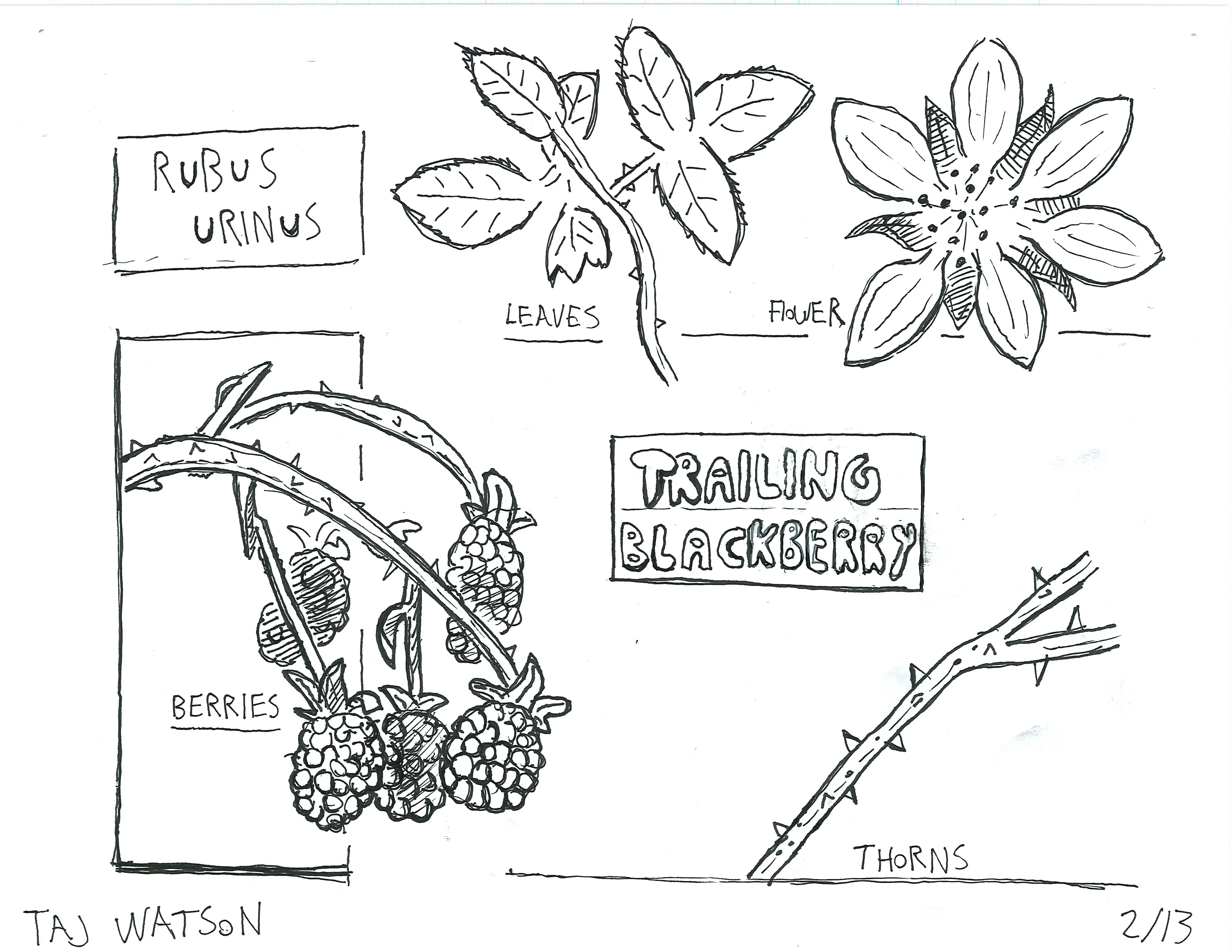
Trailing Blackberry (Rubus urinus) by Taj Watson, ID 110, Winter 2025
The trailing blackberry's prickly branches feature white flowers that bloom into dark purple berries. Though invasive, the vines offer wildlife and recreational users a tart, juicy treat from May to September.
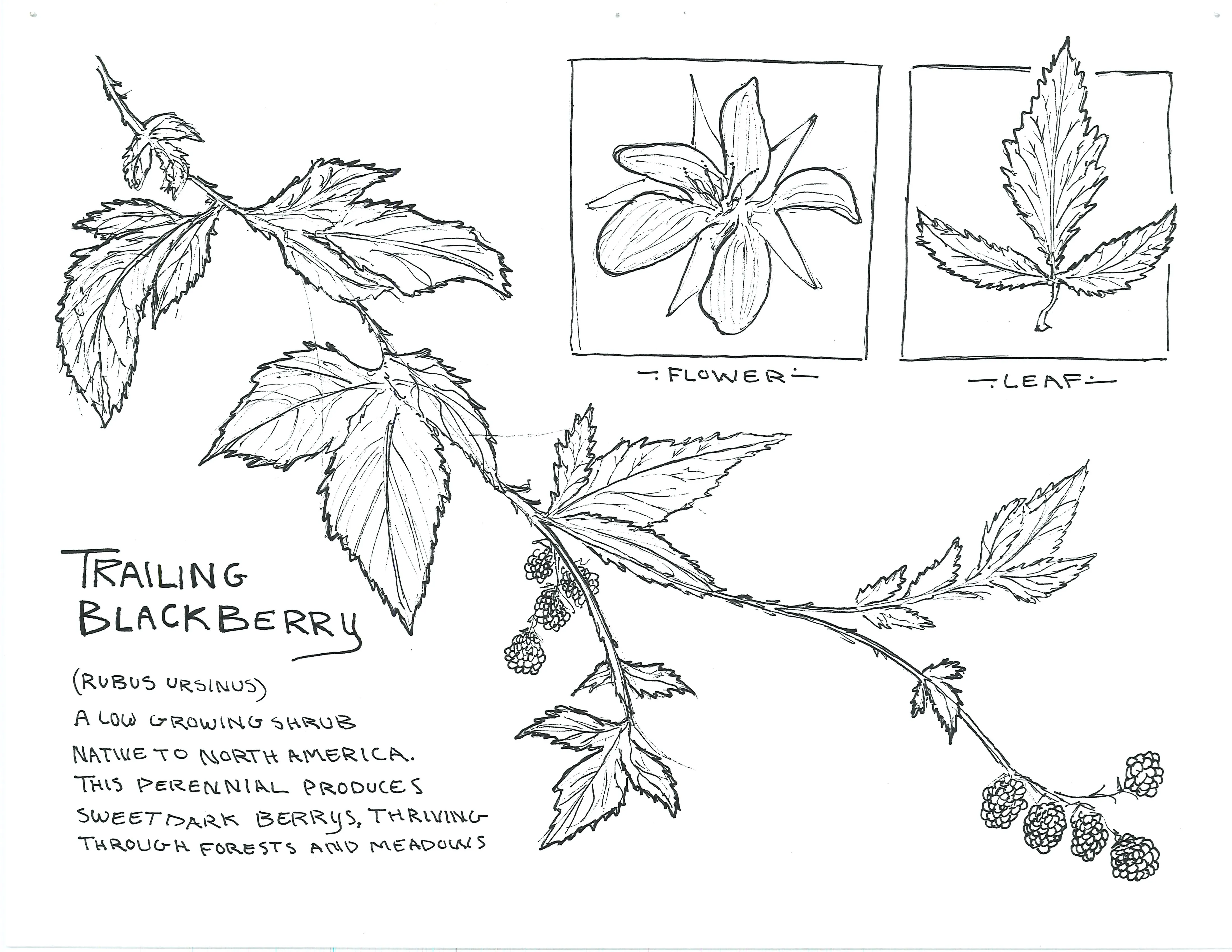
Trailing Blackberry (Rubus urinus), Uncredited, ID 110, Winter 2025
This thorny perennial shrub, native to North America, produces a sweet dark berry and grows abundantly in forests and meadows in the Pacific Northwest.
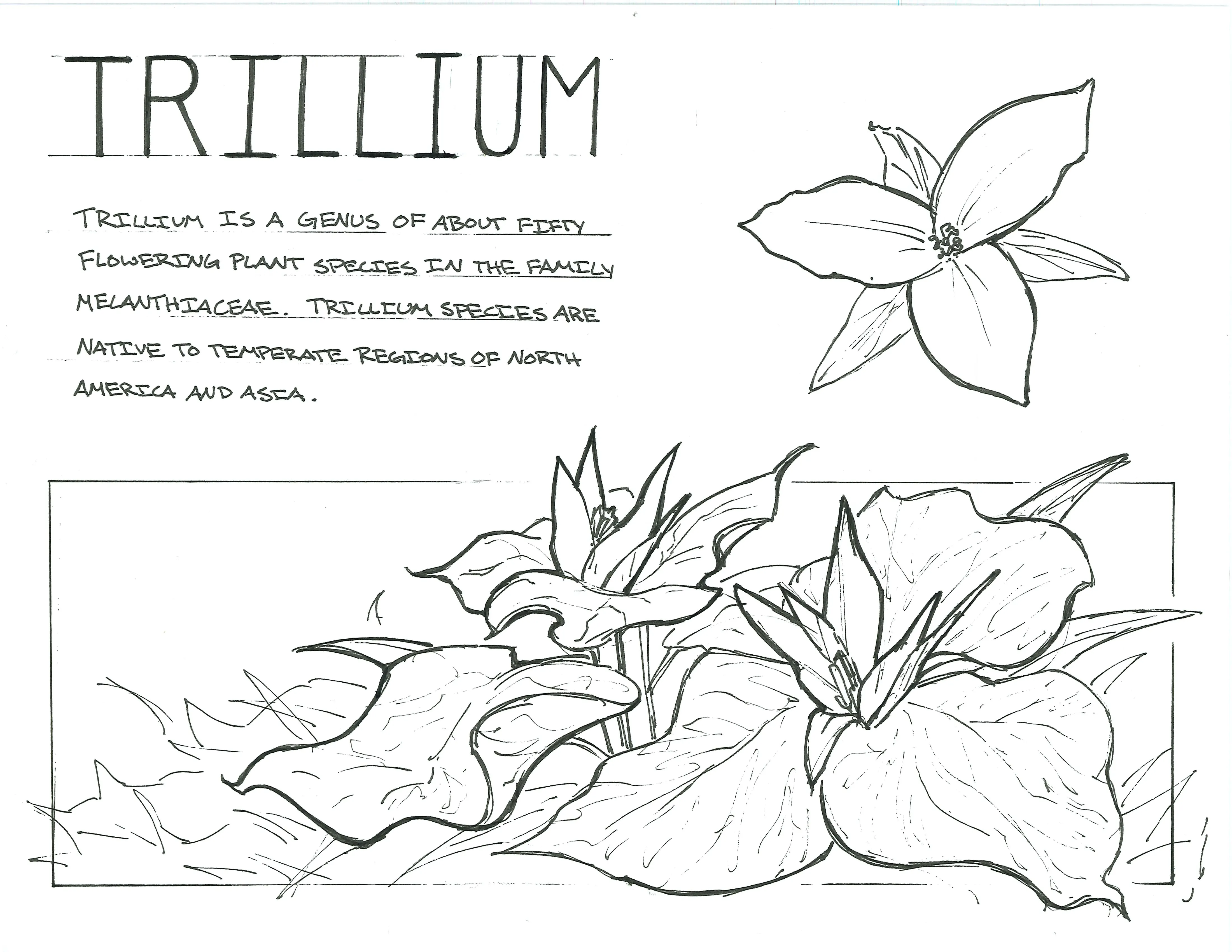
Trillium (Trillium ovatum), Uncredited, ID 110, Winter 2025
The trillium is known for its large ovate-rhombic leaves with white petals and yellow stamen. The Trillium genus spans around 50 species of flowering plants and is often referred to as “toadshade.” The Trillium species can most commonly be found in temperate regions of North America and Asia.
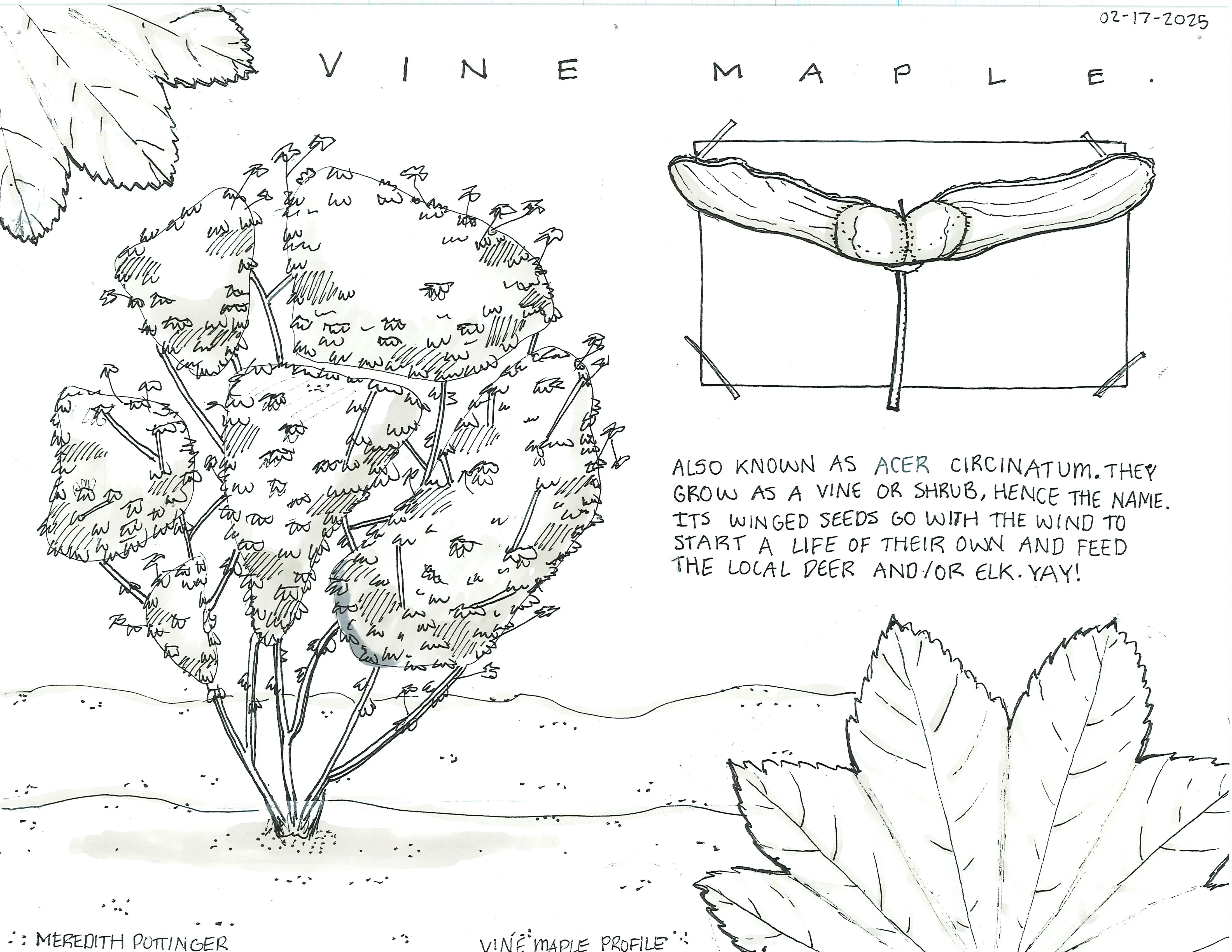
Vine Maple (Acer circinatum) by Meredith Pottinger, ID 110, Winter 2025
The vine maple grows as a vine or shrub and produces winged, paired seeds, or “helicopter seeds” that glide on the wind in a gently rotating manor - These provide food for local fauna.
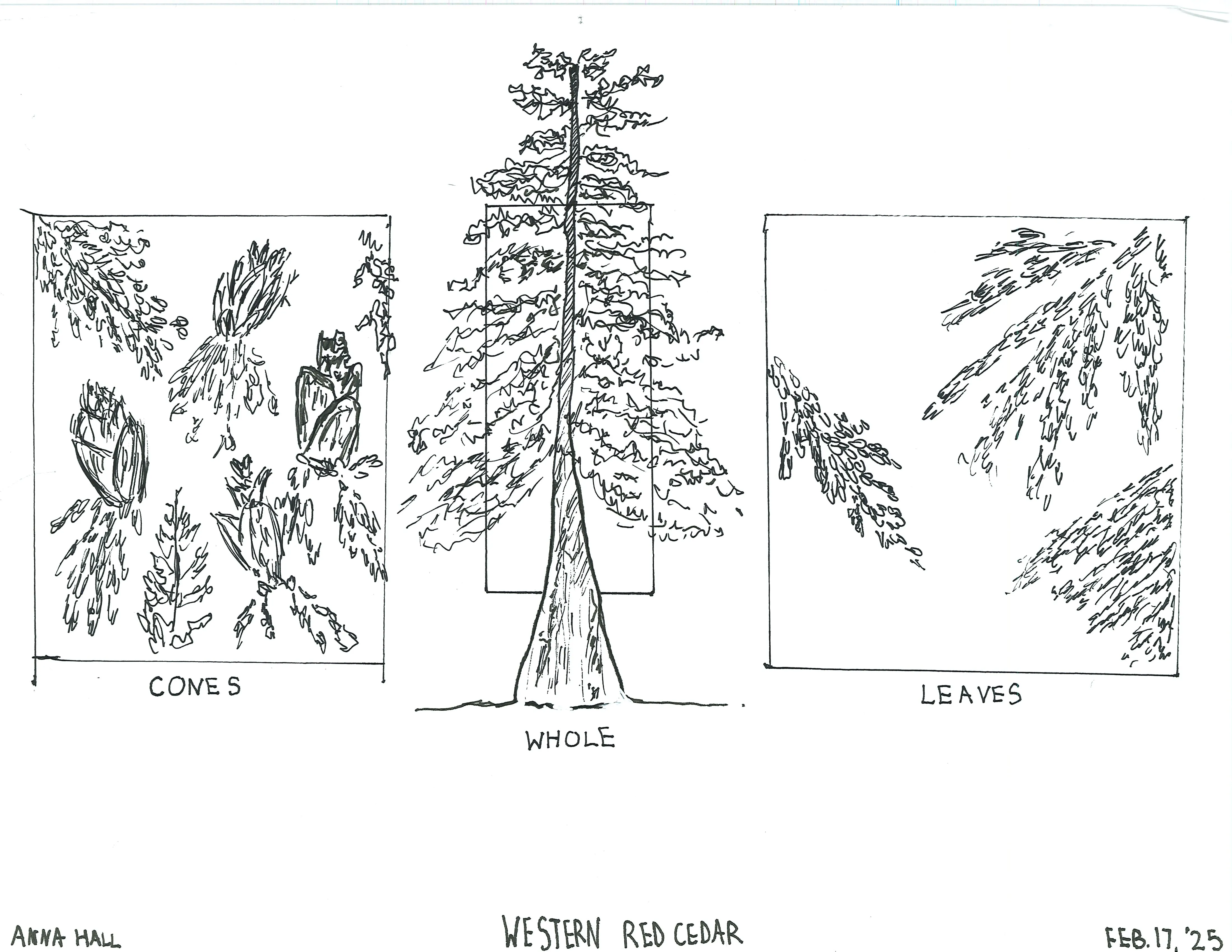
Western Red Cedar (Thuja plicata) by Anna Hall, ID 110, Winter 2025
Western red cedars are very large trees recognized for their swollen trunk, fissured bark, and scale-like leaves. They produce small cones, ranging from green to brown, that decorate the ground near the majestic trees in the Sehome Hill Arboretum.
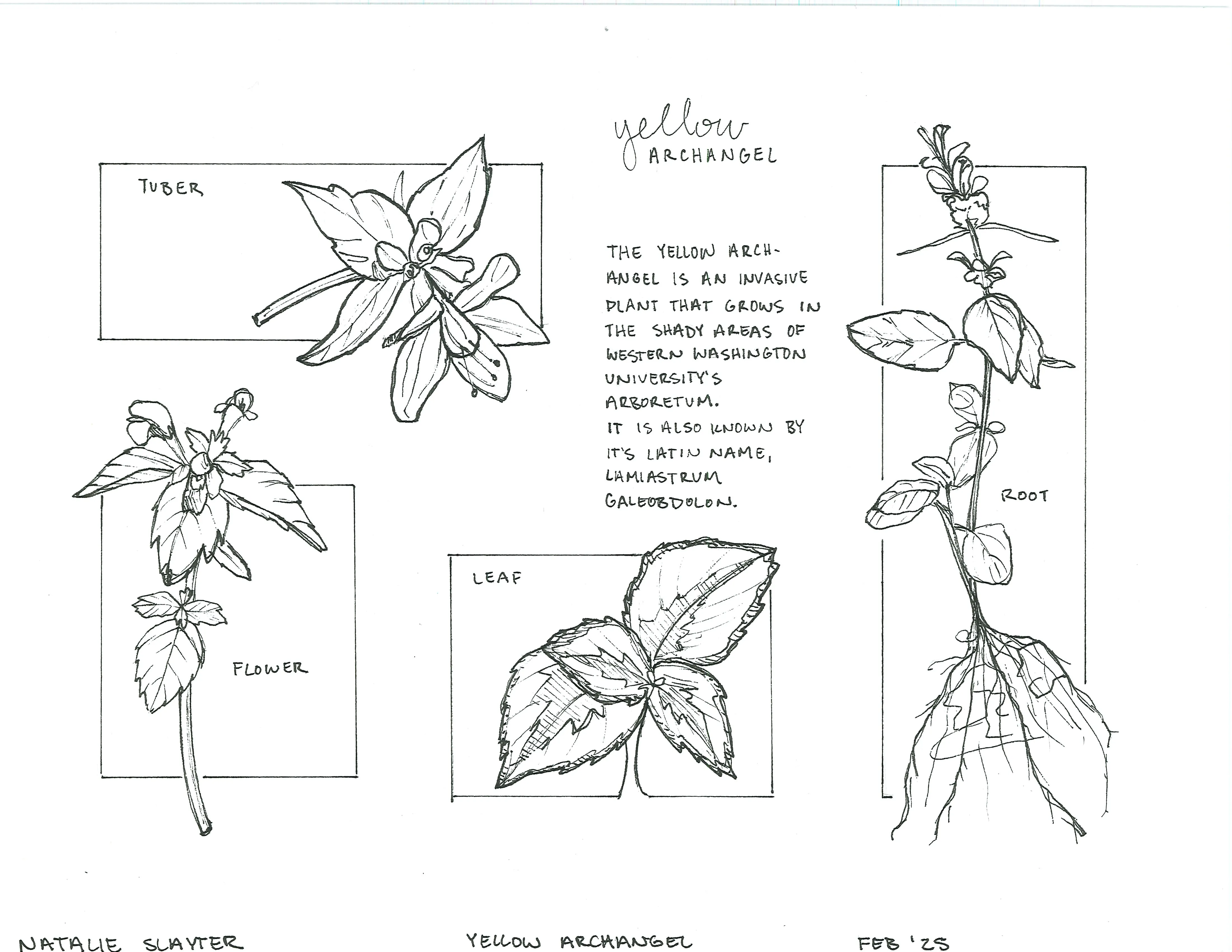
Yellow Archangel (Lamium galeobdolon) by Natalie Slayter, ID 110, Winter 2025
The Yellow Archangel is an invasive plant that grows in the shady forest of the Arboretum and produces clusters of yellow petals in April and May.